Waller County Master Gardeners
April 2026 e-Blast
|
Growing Waller County one garden at a time.
|
Happy Spring everyone,
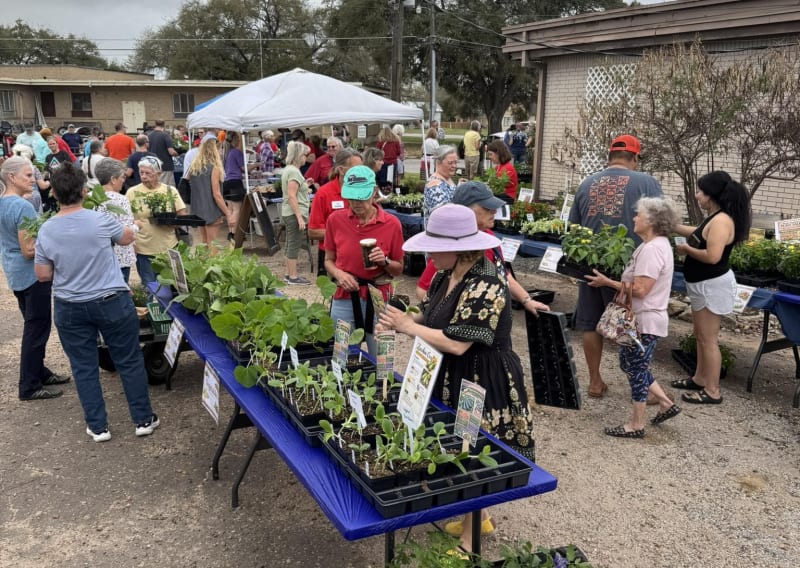
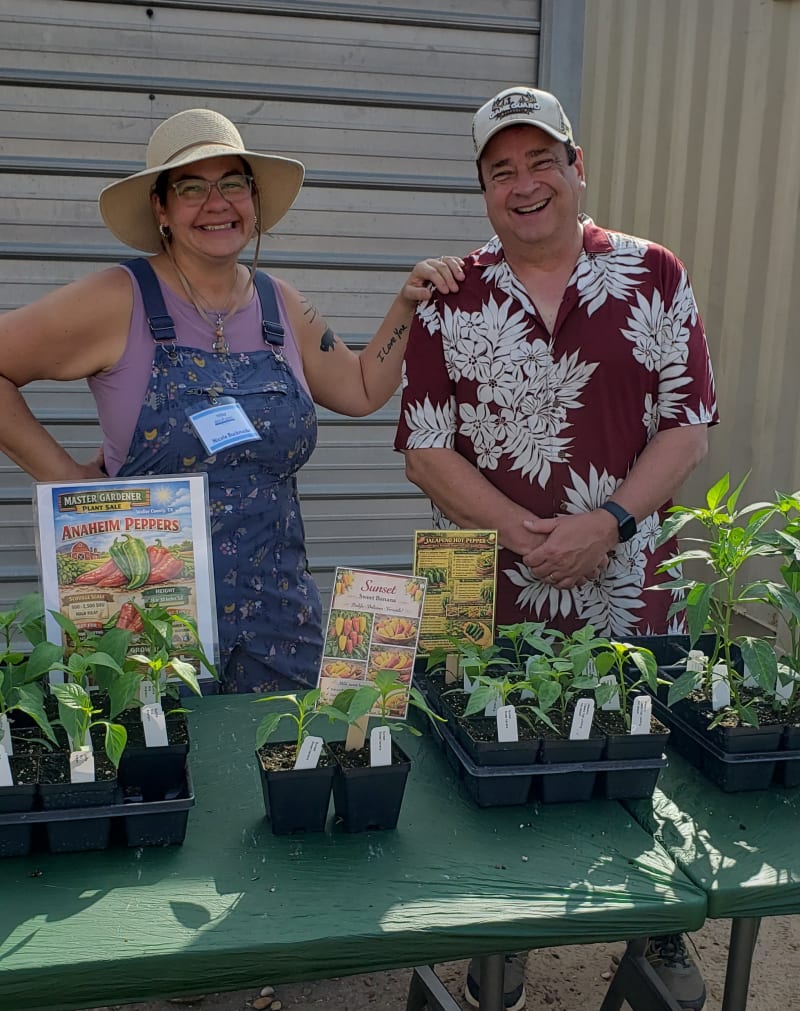
The Waller County Master Gardeners have been busy. March 7 was our Spring Plant Sale. We had a great selection of vegetables, herbs and ornamentals and sold out of everything. The weather was beautiful and many of you came out to start your spring planting. Many thanks to all of you. Our scholarship fund is now full and ready to give away to deserving students.
|
Our next event is our Lunch & Learn on April 2 at 11:00 am at the AgriLife office in Hempstead. Come and learn how to care for your trees. We are tentatively planning a seminar on May 2 from 9:00 am-noon. Our planned topics are garden pests and preserving the harvest. All the details are not yet finalized so watch our Facebook page or website for more information. This will be a free event.
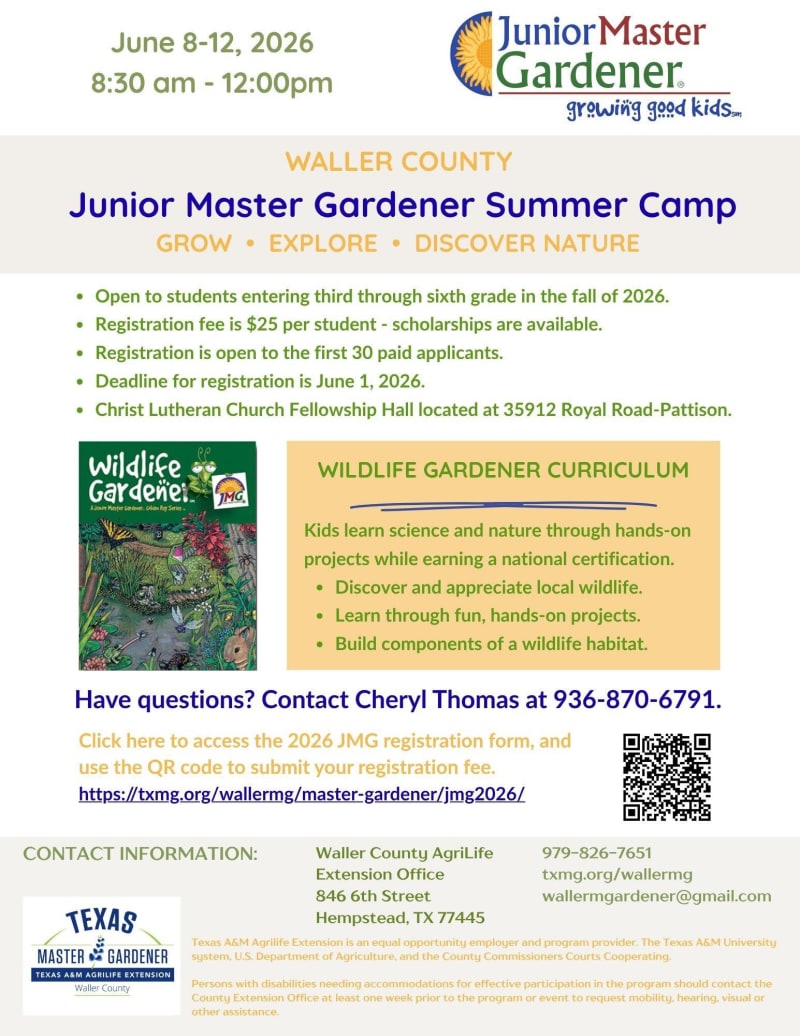
Registration is open for our Junior Master Gardener Camp to be held in June. See the flier below for all the details.
Happy Spring!
Mary Ann Drawl
President, Waller County Master Gardeners
|
Waller County Master Gardener's Officers
|
Mary Ann Drawl - President
MaryAnn Miron - Vice President
Kathy Nasr - Secretary
Irma Canney - Treasurer
Ag. and Natural Resources Agent
Matt March
Waller Co. Extension Office
Waller County Master Gardeners
846 6th St
Hempstead, TX 77445-5402 USA
(979) 826-7651
wallermgardener@gmail.com
Editors:
Connie Holub
Ashley Aborisade
|
Welcome to the Waller County Master Gardeners’ monthly e-Blast keeping you up-to-date with educational programs and events going on during the month plus links to timely AgriLife Horticultural articles. All programs are supported by the Waller County Master Gardener Association through the Waller County AgriLife Extension Service.
|
WCMG Business Meeting, April 2nd, 9:00 -10:00, @ Waller Co. Extension Office, Members only.
WCMG Speaker Series: April 2nd, 11:00-12:00, Guess Speaker: Ben Plunkett (TX A&M Forest Service) Topic: Planting & Growing Trees @ Waller Co. Ext. Office.
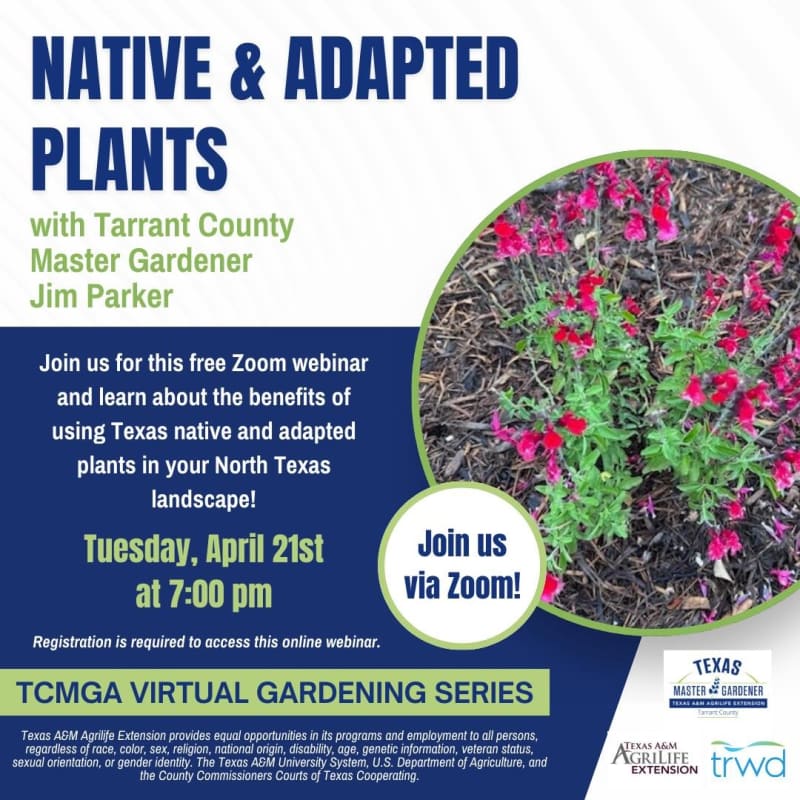
Native & Adapted Plants: April 21st, 7:00pm, Speaker: Tarrant County
Master Gardener Jim Parker, Free Zoom Webinar put on by Tarrant
County Master Gardeners. Registration is required. tarrantmg.org
MG Help Desk: 817-884-1944
Jr. Master Gardener Camp: June 8-12, 8:30 – 12:00, open to
students entering the 3rd thru 6th grade in the fall of 2026, Fee: $25.00,
Registration Deadline: June 1st, Place: Christ Lutheran Church
Fellowship Hall, 35912 Royal Road, Pattison, TX, Questions: Ext.
Office—979-826-7651 or Cheryl Thomas 936-870-6791. Opened to the
first 30 paid students. https://txmg.org/wallermg/master-gardener/jmg2026/
|
Texas A&M AgriLife Extension provides equal opportunities in its programs and employment to all persons, regardless of race, color, sex, religion, national origin, disability, age, genetic information, veteran status, sexual orientation, or gender identity. The Texas A&M University system, U.S. Department of Agriculture, and the County Commissioners Courts Cooperating.
|
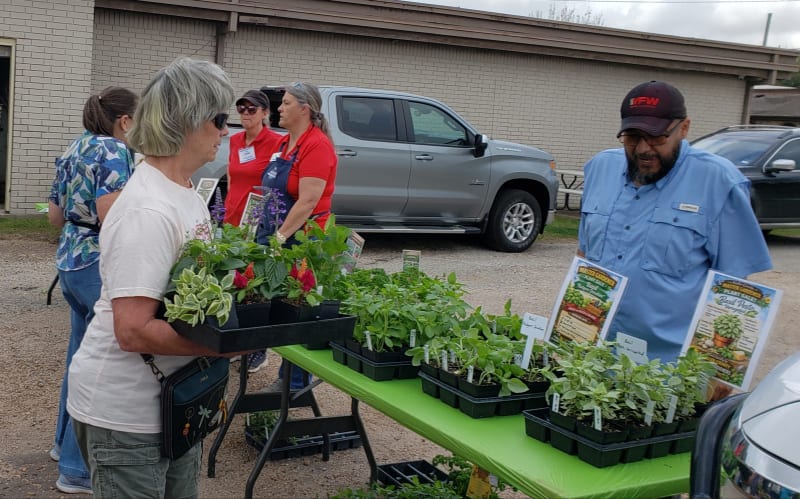
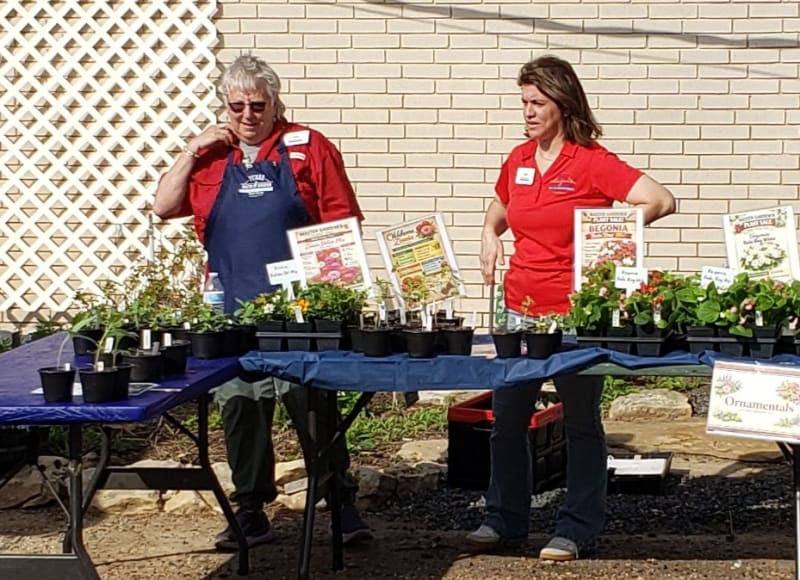
Plant Sale held March 7 at the Extension Office.
|
The Waller County Master Gardeners would like to thank everyone who
participated in the WCMG Annual Plant Sale Saturday, March 7th. We
thoroughly enjoyed meeting you, answering your questions and helping
you choose that special plant for your garden. A large variety of spring vegetables, herbs and ornamental flowers as well as blueberry bushes was
available to choose from. Next year’s plant sale is already in the works, and
we look forward to seeing you again.
|
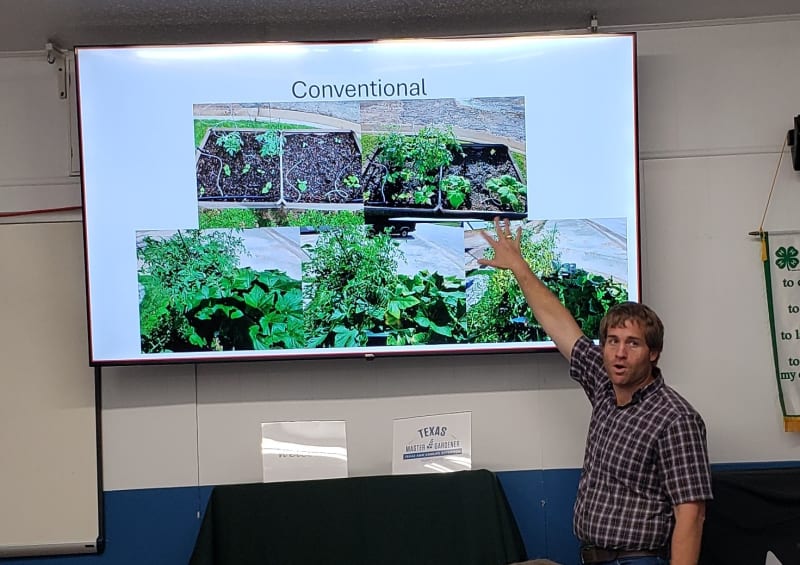
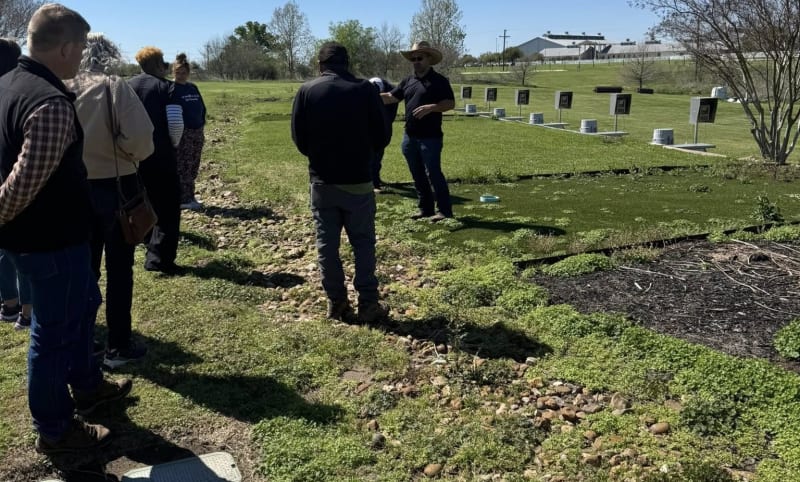
Waller County Extension Agent Matthew March presented his 2025 Fertilizer Comparison Results report to the Waller County Master Gardeners on Thursday, March 5th. March designed the trials and then partnered with the master gardeners to execute the experiment. The trials took place at the Extension Office in four raised beds. The objective was to demonstrate common fertilizer types and their impact on vegetable production in spring and fall gardens. The three fertilizers that were used in the spring & fall trials were a conventional fertilizer, worm castings and Alpaca manure.
|
Spring Garden Presentation - Tomball Garden Club
|
Master Gardener Connie Holub was invited by the Tomball Garden Club to discuss Spring Gardening at their March Meeting. Connie discussed her gardening methods for spring and presented a power point showing her garden and the different varieties of vegetables and herbs she plants each year.
|
Intern Class - Out and About
|
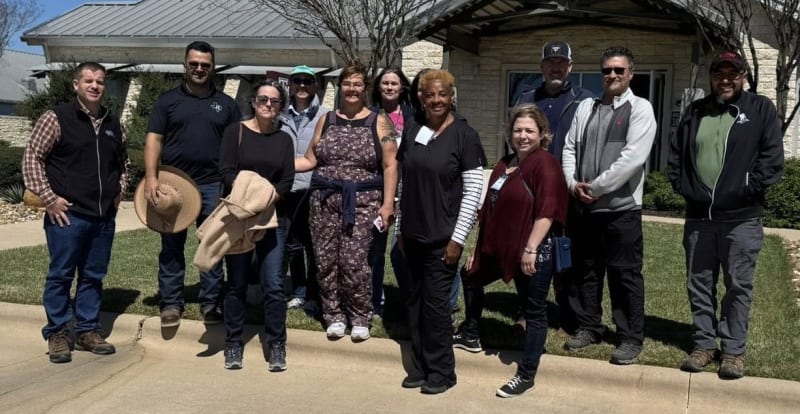
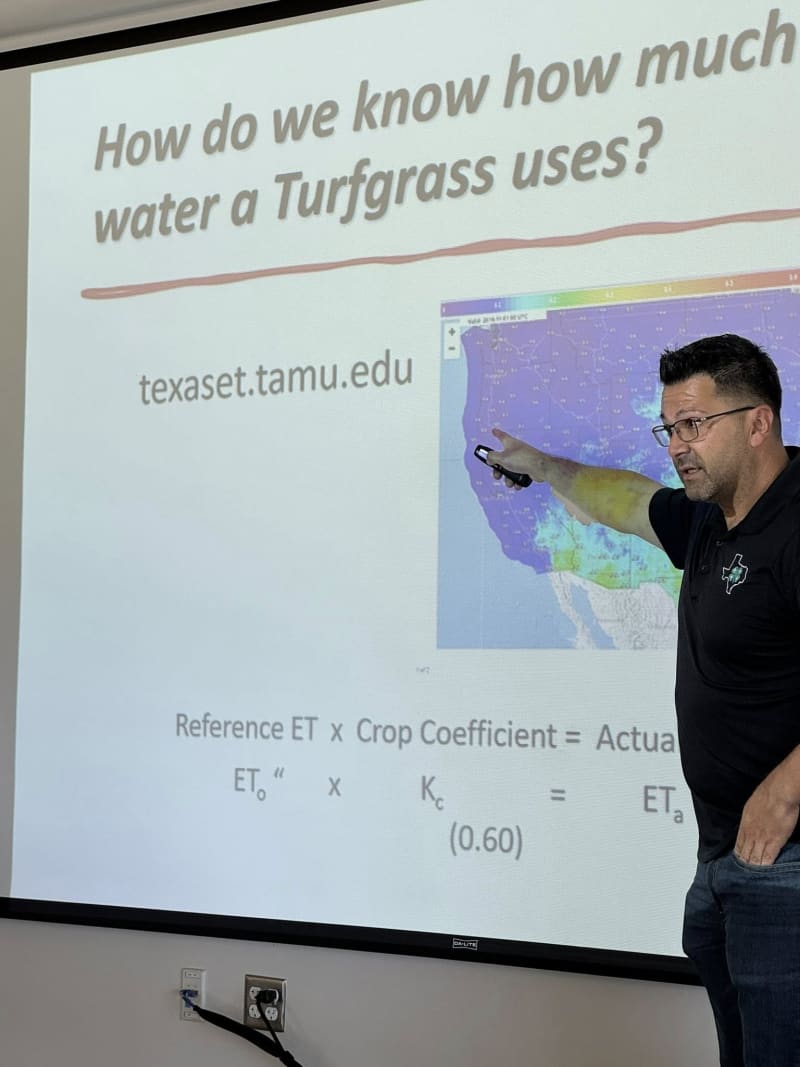
The 2026 WCMG Intern class took a field trip to The Scotts Miracle Grow Facility for Lawn and Garden Research in College Station. Dr. Chavarria was the speaker and tour guide for the day.
|
Texas A&M AgriLife Extension provides equal opportunities in its programs and employment to all persons, regardless of race, color, sex, religion, national origin, disability, age, genetic information, veteran status, sexual orientation, or gender identity. The Texas A&M University system, U.S. Department of Agriculture, and the County Commissioners Courts Cooperating.
|
|
Caring for Phalaenopsis Orchids
(Moth Orchids)
By Connie Holub, WCMG
|
Phalaenopsis orchids or moth orchids are one of the most popular gifts given for Valentine’s Day, Mother’s Day and birthdays. You may have received one already and are wondering what to do with it after all the flowers wilt and fall off. Fear not for they are one of the easiest orchids to care for and when cared for properly, they have a life span from 15 to 20 years.
In the early nineteenth century, European explorers and traders stumbled upon these beautiful exotic plants in faraway places such as Thailand, Malaysia, Indonesia and the Philippines. The Dutch East Indies Company played a major role in transporting them from the colonies in Southeast Asia. Dutch botanists and horticulturists in the colonies would cultivate and propagate the species before shipping them to the European and North American markets. It all started when Scottish botanist, Robert Brown, brought back several specimens from his travels to Java, one of the Greater Sunda islands in the South East Asian country of Indonesia.
|
Light — Bright, indirect light is important for the orchid to thrive. Place in a south or east-facing window with bright, filtered light. Rotate your orchid to keep its growth even. Light is very important. Do not put your orchid in a dark room and expect it to thrive much less survive.
Soil—A special orchid growing medium found at your local nurseries and garden centers is needed. It’s mostly wood chips but sphagnum moss can be added to help the roots stay moist longer. Do not plant your orchid in regular potting soil the roots need air circulation. Place the wood chips in a water-filled container overnight and drain the next day then put the orchid in your plastic or clay pot placing the wood chips around the roots.
Water—Weekly watering is all you need. A light grayish-colored root instead of a bright green healthy-looking one is a good sign your orchid needs water. Let it dry before watering again. If your orchid is outside under a shade tree or a porch, you may have to water every day or every 2nd day. Water only in
the morning so the leaves will dry out before nightfall. If the leaves start to look withered or crinkled, submerge the container in a bowl of water covering only the roots for an hour and then take out and let the water drain. Sitting in water continuously will cause root rot. For those of you who water by putting 2 or 3 ice cubes on top of the root system to slowly melt, yes, you can do it. It seems to help prevent overwatering. A study was done showing that it neither helped nor harmed the orchid.
Humidity — Orchids need 50 to 80 percent humidity.
Fertilizer—According to the American Orchid Society, a fertilizer high in nitrogen such as a (30-10-10) is good in a bark-based medium. When the orchid is flowering, a fertilizer high in phosphorous (10-30–20) is good to promote more blooms. Use twice a month, especially during warm humid conditions. Once the blooming period is over, go back to the high nitrogen fertilizer. For hot and high humidity periods (Texas summers), one can use one-quarter of the recommended amount with each watering.
Containers—Orchids can be planted in plastic pots and glazed or unglazed clay pots. Ventilation for orchid roots is a must. Many of the clay orchid pots have slits cut into them.
Blooming Period
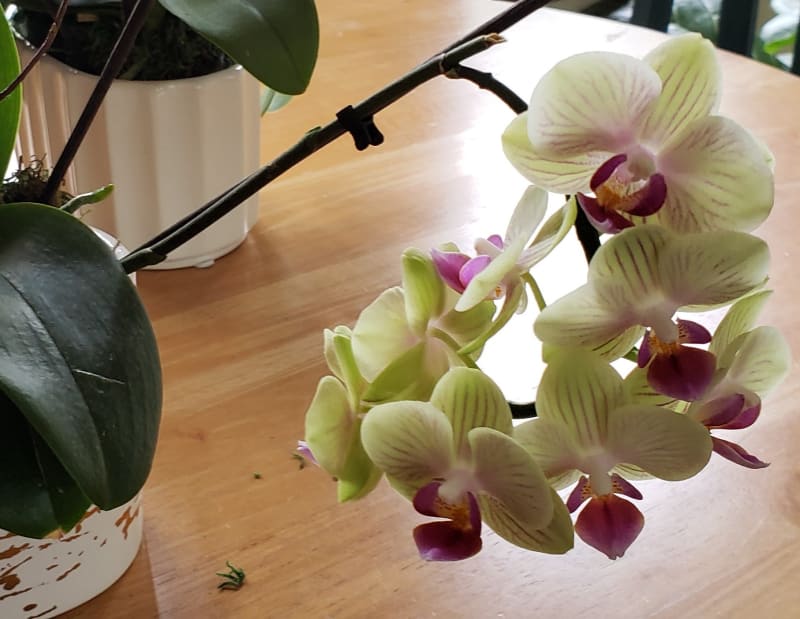
A unique characteristic of the Phalaenopsis orchid is its ability to bloom for an extended period of time, from 2 months up to six and then come back and bloom a second go round if given a chance. When the spike or stalk has finished blooming, let it be a guide as to how much of it you trim back. Find where the last flower has fallen off and then look for a node right below it. Cut between the two about a quarter of an inch above the node. The node is the ridge on the stem where the bud forms.
|
2nd Round of Blossoms on this stalk.
The flower stem is growing from the top node under the cut.
|
If you choose not to do this, then cut the stalk about an eighth of an inch from the base of the plant. You can then wait until a new flower stalk begins to grow for your next flush of blossoms. Finally, caring for Phalaenopsis orchids or moth orchids is a rewarding endeavor that can lead to a stunning display of blossoms year after year. With these simple yet effective tips, you can ensure your orchids thrive and continue to grace your home with their natural beauty. Happy orchid gardening!
|
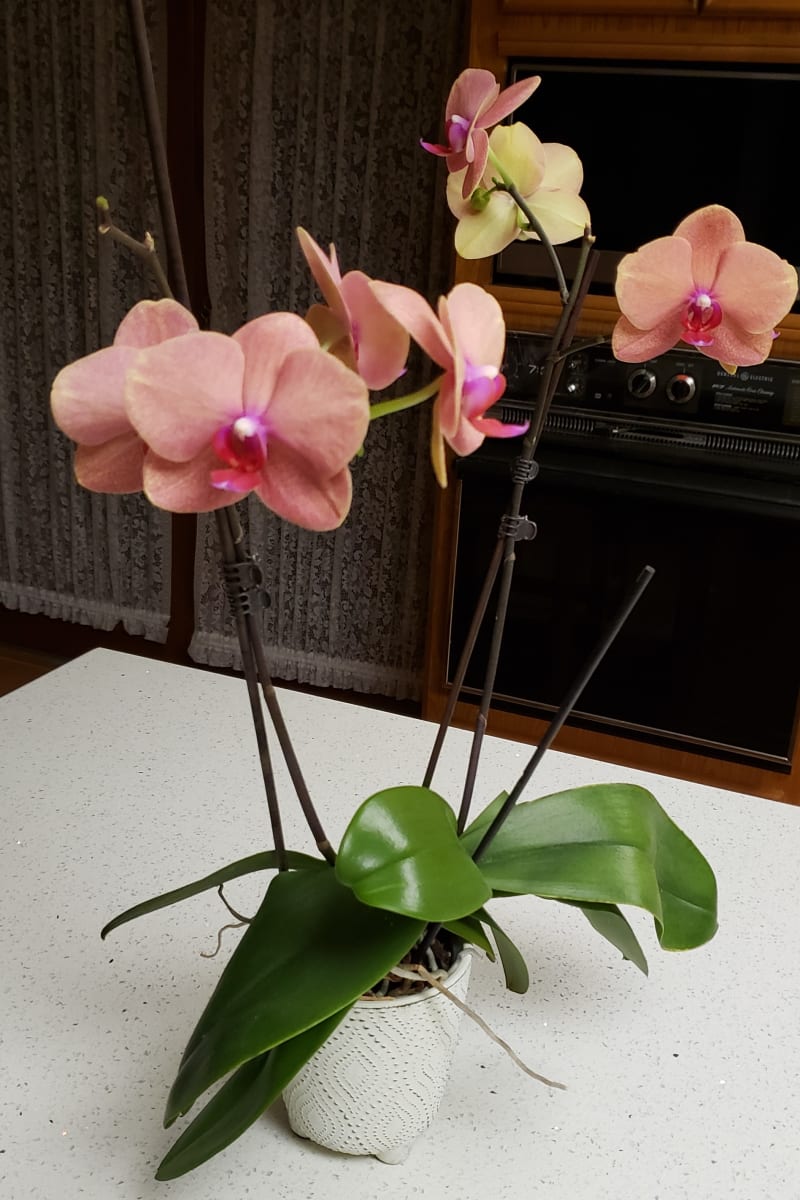
Both stalks on this orchid are on their 2nd bloom cycle. The stalk on the right
bloomed from two different nodes/buds. The stalk on the left was not cut unlike the stalk on the right and yet it bloomed a second time also.
|
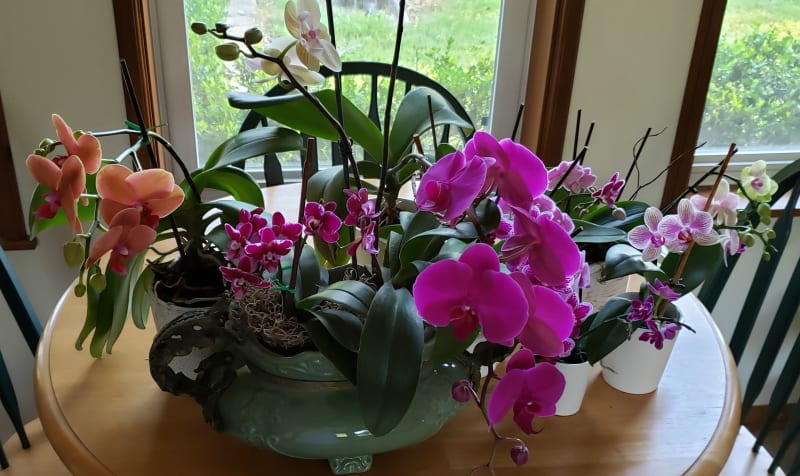
There are different sizes and colors of Phalaenopsis orchids. Pictured are mini orchids as well as large ones. You can tell by the size of their flowers. Phalaenopsis orchids come in a wide array of colors, including: white, pink, purple, yellow, vibrant reds and salmon oranges. If you see colors such as blue or black, the orchid is usually dyed to achieve this color. Phalaenopsis orchids bloom from late winter into spring.
|
Copyright (C) 2026 Waller County Master Gardeners. All rights reserved.
Want to change how you receive these emails? You can update your preferences or unsubscribe
Texas A&M AgriLife Extension is an equal opportunity employer and program provider. The Texas A&M University system, U.S. Department of Agriculture, and the County Commissioners Courts Cooperating.
|
Waller County Master Gardeners
|
|