  Notes from the Field / Summer 2026 A big hello to Puget Sound Restoration Fund’s (PSRF) stellar community of partners and supporters. It’s been a while, so consider this newsletter our restart of quarterly-ish updates! We’re so glad to be back, sharing our happenings with you all. We would love to see you at some of our fun upcoming events (details below). In the meantime, we're excited to share updates from our recent work: expanding our oyster restoration partners, launching a community kelp monitoring project, and nearing 100k of outplanted abalone! As always, thanks to you for showing up for PSRF in so many ways! 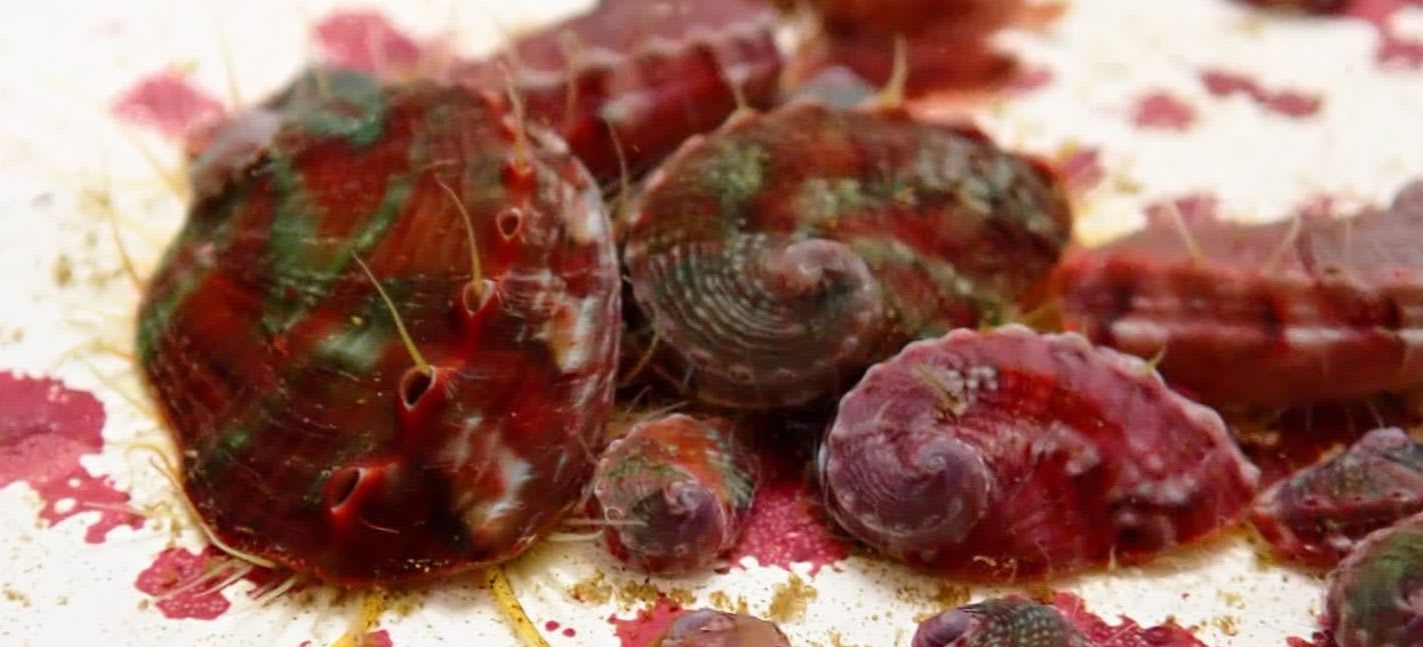 Juvenile pinto abalone, grown at the PSRF conservation hatchery, awaiting outplant Dates for Saving Saturday, July 18 Join us for our 4th Back-to-the-Beach Bash at Baywater Shellfish Farm in Thorndyke Bay; tickets here! Saturday, October 3 Act fast! Tickets go on sale August 1 for Whiskies for Wildlife at the Manor House on Bainbridge. October 4-7 Be part of the 2026 International Conference on Shellfish Restoration in Shelton, WA, co-hosted with the Squaxin Island Tribe. Saturday, November 7 Don't miss Oyster New Year at Elliott's Oyster House (Seattle). Nab tickets now before they're gone! Innovative & Novel: the PSRF way Truly, the world is our oyster, and we take great delight in developing new ways to scale and improve restoration. Be it a new partner, program, or approach to a familiar venture, PSRF is always reaching, stretching, and growing. Our healthy ballast of foundational programs, wildly talented staff, and support make it possible for us to find and explore new horizons. We wouldn’t have it any other way. Many hands make, well, lots more oysters A little over two years ago, we began dabbling with a new model for Olympia oyster production - outfitting communities with the equipment, know-how, and (most importantly) oyster larvae that they can grow until ready for outplant at restoration sites throughout the region. Our first partner, Puget Sound Skills Center (PSSC; Burien, WA) led by the incomparable Joanna Rodriguez, was ALL IN. High schoolers at PSSC have doubled efforts year over year, producing 40 bags with ~300,000 oysters. 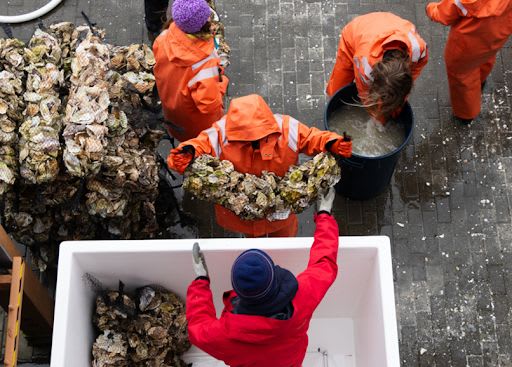 Students move bare shell bags into new NWMC tanks Our second partner, Northwest Maritime Center (NWMC; Port Townsend, WA) didn’t hold back either. High schoolers and volunteers produced 100 bags of seeded cultch with ~414,000 oysters, in tanks supplied by Jamestown S’Klallam Tribe. The bags are now off, filtering water, and rebuilding habitat in North Chuckanut Bay, in a project led by the Whatcom County Marine Resources Committee. Thanks to Builders Vision, Washington Department of Fish & Wildlife (WDFW), Coastal Conservation Association-WA, and private donors for support! I spy, with my little i(Phone) We’ve recently launched Kelp Spot - an iNaturalist kelp monitoring project - to transform the simple act of snapping photos of kelp into useful data. Around the world, people upload geolocated, time-stamped pictures of droves of species to iNaturalist. With Kelp Spot, you can help us capture valuable trends about seasonal appearances of bull kelp across the Salish Sea. See some bull kelp? Take a photo and add it to Kelp Spot! Huge thanks to Kayla Black for her support on this project!  Backpacking Bivalves  Collecting cockles at Chuckanut Shellfish; outplanted seed-laden cockles; the auspicious seed gluing crew! Are cockles actually the best-kept secret for eelgrass restoration? In a great convergence of marine habitat restoration efforts, we are testing the efficacy of attaching eelgrass seeds to cockles, which then bury themselves, thereby ‘planting’ the eelgrass seeds. Eelgrass planting is notoriously finicky; the approach we are testing has shown promise on the East Coast - we're hoping for similar results. Big thanks to the team: Padilla Bay National Estuarine Reserve (lead), Chuckanut Shellfish, The SeaDoc Society, San Juan Islands Conservation District, and Shannon Point Marine Center/Western Washington University (SPMC/WWU). Tried & True (also the PSRF way) Gaggles of gastropods released This spring, thousands of young abalone were released in rocky crevices in the San Juan Islands and Strait of Juan de Fuca. Our team (PSRF, WDFW, Seattle Aquarium, and Samish Indian Nation) outplanted over 18k abalone across 26 sites, bringing our total to >90,000 outplanted across 62 sites. We anticipate that another ~4k will be outplanted later this year by partners from SPMC/WWU. If so, the 2026 total will be ~70% more abalone than we have ever outplanted in a single year. This scaling up has come from deliberately investing in new partners and growout facilities, research resulting in improved production methods, and creative advances in broodstock management.  Divers begin outplant of abalone at restoration sites The great unspooling  PSRF diver surveying outplanted kelp seedlings - well on their way to being truly MACROalgae Bull kelp reforestation is truly a makers’ exercise. It begins with meticulously growing seed on large spools of twine, then carefully wrapping the seeded line around heavy forms to hold the kelp at the seafloor as it grows and stretches towards the surface. Take a dip in the 2025 forest here. This year, we’ve planted bull kelp at Point Jefferson / dxʷqigʷəc (with the Suquamish Tribe), at Squaxin Island (with the Squaxin Island Tribe), in the San Juan Islands (with Samish Indian Nation), and at 8 kelp garden sites around Bainbridge Island. Anticipation is building as we watch and wait for the first shiny bull kelp bulbs to reach the surface. Underwater, we see that our “making” is working - tiny bulbs, intricate holdfasts, and sinuous blades are growing rapidly. Growing more than just oysters Members of our Community Supported Aquaculture program and others are eagerly tending to and harvesting Port Madison Petites grown at PSRF’s Port Madison Community Shellfish Farm on Bainbridge Island. Through 4 of our 5 scheduled harvests this spring, we have had 109 volunteers on the beach working more than 200 hours to harvest 663 dozen delicious oysters from the tideflats. These hands-on community events connect people to delectable oysters while also building support for keeping waters in Puget Sound clean. Huge thanks to Bainbridge-based photographer and friend-of-PSRF Kelsey Bernert for capturing the joy of the harvest, and magic of this special place.  Volunteers and PSRF staff size-sort oysters and rinse bags at our Community Shellfish Farm - smiles are not in short supply Video Spotlight Olympia oyster spat-on-shell on its way to outplanting At the start of the video below, look at the bag of spat-on-shell (i.e., young, live oysters set onto bare Pacific oyster shell) waiting to be loaded up for a boat trip out to a restoration project with the Swinomish Indian Tribal Community. All of those small, dark lumps are juvenile Olympia oysters that we produced at our conservation hatchery. We aim to have ~10 juvenile oysters per shell. Our count this year? >50. WOW. Dive Into Our Latest News Recent media coverage and manuscripts showcase the impact of our programs here and elsewhere. Goodbyes & Hellos We’ve said adieu to two wonderful staff members - Microalgae Technician Kloie Kugler and Kelp Lab Technician Sofia O’Connell. Both left PSRF better than when they arrived, and will be missed. And welcome to our new Microalgae Technician, Elle Mangahas! Looking Ahead Be ready to voraciously consume news of our pilot shell recycling program and next satellite facility for pinto abalone recovery, and welcome our first ever Development Director. Connect with us! If you’re interested in getting more involved — through volunteering, sharing our story, or partnering with us — we’d love to connect. Please reach out! |