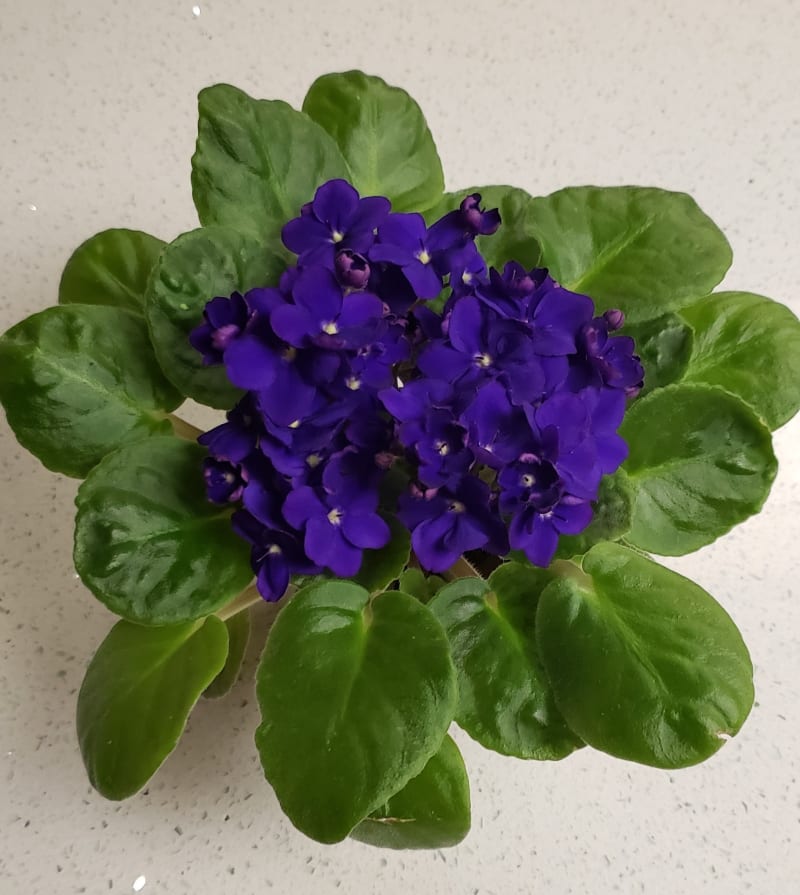
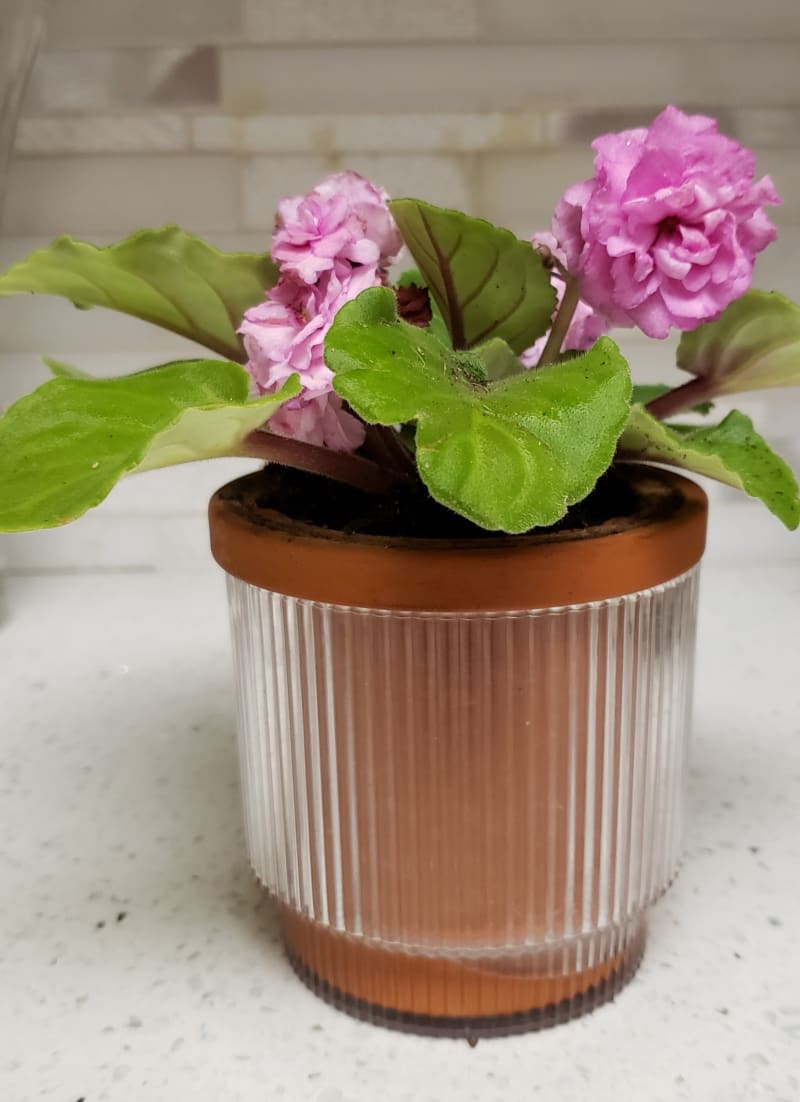
African violets are a compact houseplant that many find fussy and hard to grow, however with the right care and conditions, they will give you many days of beautiful blooms two or three times a year.
The African violet is a tropical plant originating from East Africa, specifically from Kenya and Tanzania. The warm and humid conditions of these regions provide the ideal conditions for their growth. African violets were first found in 1892 by a German colonial official and plant lover who collected the seeds and sent them back home to his father.
The first record of African violets in the United States was in 1894. They didn’t survive long due to New York City’s frigid weather conditions. Once fluorescent lights came into existence, the houseplants thrived and became very popular.
Since their introduction, hybridization has created thousands of varieties with diverse colors, foliage and flower forms. Despite their name though, they’re not related to true violets.
African violets are not hard to please. If you can master the key elements of light, water, temperature and potting, you will have one happy house plant for years to come.
Light Requirements
Indirect sunlight is an important requirement for African violets. Too much sun will cause the leaves to shrivel or spot. Place your plant in an east-facing window or one that has filtered light. Rotate your plant once or twice a week for even light exposure.
Water Requirements
Here is where African violets get fussy. They do not like their leaves getting wet. Therefore, bottom watering is highly recommended. When the soil feels dry, place the pot into a saucer or bowl filled with water for about 20 to 45 minutes or until the soil feels moist then take the pot out and let drain in the sink. The holes in the bottom of the pot will soak up the water. Do this whenever the top soil of the plant feels dry or every five to seven days. Do not allow the water to go over the rim of the pot when placing in the saucer or bowl.
If you want to fertilize, use a water-soluble fertilizer and do it when you water your houseplant.
Temperature Requirements
African violets don’t like the temperature to drop below 60 degrees. Just like you and me, they like to be comfortable and 70 degrees is their comfort zone. Temperatures above 80 degrees slow down growth. They prefer a warm indoor environment with good humidity.
Potting Requirements
It is highly recommended that you keep your African violet in a small pot and repot every year to provide fresh soil. A slightly root bound pot encourages blooms so don’t be in a hurry to give them more space. When repotting keep them at the same level as before and be careful not to bury the crown.
Fertilization Requirements
Fertilize every two weeks during the active growing season which is spring and summer. A high phosphorous fertilizer is recommended. It is better to under fertilize than to over fertilize.
Grooming Requirements
Deadheading is recommended to keep your plants looking wonderful and blooming. Getting rid of the drooping blooms will encourage more blooms.
Finally, African violets are beautiful house plants that provide vibrant color throughout the year. They also make wonderful hostess gifts for parties and with proper care can be handed down from generation to generation due to their long life.