 As wildfires continue to threaten communities throughout the Fraser Watershed and across British Columbia, we are thinking of everyone impacted, especially those forced to leave their homes, as well as the First Nations, firefighters, emergency personnel, and volunteers responding to these devastating fires. Even amid these immediate challenges, important conversations and commitments related to watershed security continue to emerge. In the recently announced Canada-British Columbia Cooperative Prosperity Agreement, the federal and provincial governments recognized water as foundational to B.C.'s future and committed to exploring a federal investment in the BC Watershed Security Fund. The First Nations Water Caucus released a Proposed Watershed Security Strategy for British Columbia, advancing the conversation around watershed governance, planning, and long-term investment. The POLIS Water Sustainability Project released a new report, Drought Ready: From Crisis Response to Community & Watershed Resilience in B.C., highlighting the growing need to prepare for a future shaped by chronic drought. As communities respond to today's challenges, these developments are a reminder that building resilience also requires long-term investment in the health of our watersheds. Keep reading for updates from Rivershed, along with watershed news, events, and opportunities. FoodlandsRestoration doesn't end when the planting is finished. Long-term monitoring is an important part of understanding how restored habitats are changing over time and how wildlife is responding. 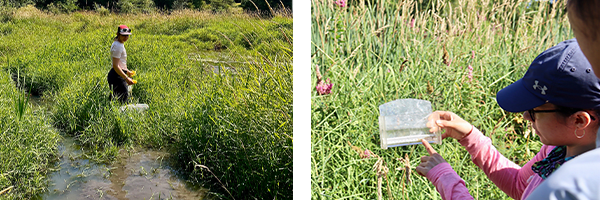 Recently, the Rivershed team carried out fish monitoring at the sc̓e:ɬxʷəy̓əm (Salmon River)* Foodlands Corridor using minnow traps, with encouraging results. Monitoring recorded Coho Salmon, Northern Pikeminnow, and more than 100 Three-spined Stickleback in a single trap, providing another indication that the site is supporting healthy aquatic habitat. *sc̓e:ɬxʷəy̓əm is the hən̓q̓əmin̓əm̓ word for the Salmon River. Translations provided by Knowledge Keepers and language learners from Kwantlen and Katzie Nations. The benefits of restoration extend beyond fish. A black bear was recently spotted near the site, while a North American Beaver has been busy reshaping one of the excavated ponds by building a dam that has created deeper water and valuable refuge for fish. Seeing these natural processes take hold in a largely urban watershed is an encouraging sign that the corridor is continuing to evolve. We're also pleased to see the bank stabilization work performing well. Thank you to Kerr Wood Leidal, the Lower Fraser Fisheries Alliance, and our Watershed Workforce volunteers for sharing their expertise and supporting this important monitoring work. Rivershed is funded in part by the following:  Registration Now Open for Watershed Workforce on the sc̓e:ɬxʷəy̓əm (Salmon River)Do you know a young person who enjoys being outdoors and is curious about environmental careers? 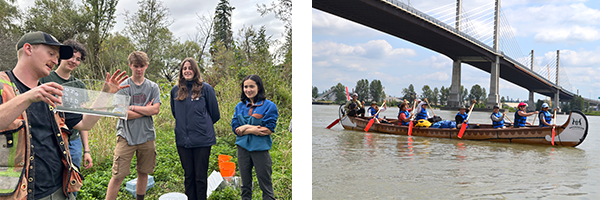 Registration is now open for Watershed Workforce on the sc̓e:ɬxʷəy̓əm (Salmon River), a free two-day overnight experience for youth ages 15–20. Participants will spend time on the land and water, take part in hands-on restoration and stewardship activities, connect with experienced practitioners, and explore career opportunities that contribute to healthy watersheds. The program takes place September 27–28 at the sc̓e:ɬxʷəy̓əm Foodlands Corridor in Langley and includes camping, meals, and a paddle on Rivers Day. If you know someone who might be interested, we'd love for you to share this opportunity. Register here. Watershed NewsBy the Numbers: Building the Workforce Our Watersheds Need Massive Metro Vancouver oil terminal proposed as endpoint for new Alberta pipeline A Tiny BC Farming Town’s Fight Against Billionaire Speculators B.C. First Nations want details, consultations on $44-billion proposed oil pipeline to Roberts Bank Uplifting Young Climate Leaders, First Nations Leadership Council gives future generations a voice BC Announces Plans for Three New Indigenous-Led Conservation Areas Protecting new wetland habitat in Omineca region Online exhibit connects global waterways through multimedia art and storytelling Feds Announce Pipeline Steps, BC Advances Protected Areas ‘Industrial sacrifice zone’: the plan to bring oil supertankers to the mouth of the Fraser River Why Building More Reservoirs Won't Solve BC's Water Problem yaqan nuʔkiy, RDCK, province launch intergovernmental working group for Goat River watershed City of Abbotsford opening a 3.3-hectare park in partnership with local developer Tailings dam raise for Springer Pit expansion approved Watershed Watch Salmon Society: 2026 Salmon Forecast Urging people, businesses to conserve water B.C., Simpcw sign consent agreement for proposed Yellowhead copper mine David Eby: B.C. finally getting fair share through new prosperity partnership Tsleil-Waututh Nation sees early success after finishing shoreline restoration project B.C. droughts are getting worse and the Province isn't ready for it Opinion: Drought is here. Why aren’t we acting like it? Xatśūll First Nation Files Petition for the Protection of Selcwéycen – Southern Mountain Caribou Okanagan hard hit by ongoing drought, plea made for conservation Whimsical Wavelengths: The Fraser River’s Loch Ness The First Nations Fisheries Council 2026 Drawing Contest is here! A way home: breaking barriers for Canadian salmon Strait of Georgia: Salmon-Herring Colouring Booklet Maple Ridge channel to undergo habitat restoration Canadian Coast Guard Issues $75,000 Penalty for a Hazardous Vessel Was this newsletter forwarded to you by a friend?Subscribe here to get Rivershed Stories delivered straight to your inbox each month. EventsMultiple dates (Virtual) - Fully remote, live, Zoom-based Green Shores training, Fall 2026 Multiple dates (Chilliwack) - Fraser Valley Invasive Species Society (FVISS) & Trinity Western University Chilliwack River Knotweed Walks 2026 August 6 (Virtual) - Northern BC Restoration Community of Practice (CoP) Small Group Coaching series August 15-16 (Kamloops) - B.C. Wildlife Federation and Tk̓emlúps Te Secwépemc Kamloops Process-Based Restoration Workshop August 16 (Port Moody): Car-Free Day 2026 September 12 & 13 (Horsefly): Horsefly River Salmon Festival September 23 – 26 (Harrison Hot Springs) - BC Chapter of the Wildlife Society 2026 Conference October 15-16 (Vancouver): BC Salmon Recovery and Resilience conference OpportunitiesPacific Salmon Foundation is hiring a Senior Development Officer, Corporate Partnerships and Major Gifts. Federal pre-budget consultations are now open. Share your ideas through an online questionnaire or formal submission by September 8, 2026. Ecotrust Canada is looking for an Economic Lead, Climate Resilience. West Coast Environmental Law is hiring an Access to Justice (A2J) Program Coordinator. Langley Environmental Partners Society has an opening for an Environmental Educator. Nature Trust of BC is hiring an Administrative Coordinator. Freshwater Policy and Practice, an open-access, transdisciplinary journal dedicated to advancing evidence-informed solutions for freshwater challenges is now open for submissions. Wildsight is looking for a Communications and Engagement Lead. BC Parks Foundation is hiring a Senior Grant Coordinator. Blueberry River First Nation is looking for a Restoration Program Manager. The Fish & Wildlife Compensation Program's annual grant intake is open. Living Lakes Canada is accepting applications for multiple 2026 Biodiversity Field Schools. The Canadian Parks and Wilderness Society - British Columbia (CPAWS-BC) is hiring a Communications Specialist – British Columbia. Do you have news, events or opportunities you'd like to share? Email them to info@rivershed.com.
The Rivershed Team Thank you for reading Rivershed Stories! Please share it with a friend or family member who cares about the health and resilience of the Fraser. The more people we can connect with, the greater our collective impact across the watershed. Rivershed acknowledges our position as a settler‑led organization working on First Nation and often unceded territories throughout the Fraser Watershed. We recognize the responsibilities that come with this position and remain committed to learning from and working alongside First Nations and Knowledge Keepers to strengthen the health and resilience of the Fraser watershed. |