September 29, 2026  National Day for Truth and ReconciliationOn September 30, we honour Survivors of residential schools, the children who never returned home, their families and Indigenous communities. The National Day for Truth and Reconciliation was established in response to Call to Action 80 of the Truth and Reconciliation Commission and coincides with Orange Shirt Day. Commemoration matters. But reconciliation also asks us to consider what the past continues to produce in the present, and what must change so that future generations inherit something different. For BLAC, this invites a broader reflection on systemic inequality, substantive equality and the difference between recognizing injustice and repairing the conditions that allow its effects to continue.
In our latest article, The Distance Between Recognition and Repair we reflect on what it means to move from acknowledgement toward meaningful repair.  LEGAL NEWSFederal Court: Evidence of Anti-Black Racism Cannot Be Brushed Aside By Sanjay Campbell, PhD, Community Legal Worker at BLAC
The Federal Court has ruled in Bent and BLAC v. Canada, 2026 FC 1161, a case involving the treatment of evidence about systemic anti-Black racism in an immigration inadmissibility proceeding. BLAC participated as a co-applicant alongside Rowan Astrick Bent, a Black man who came to Canada from Jamaica as a child and has lived here for most of his life. In seeking reconsideration of a decision to refer his case to an admissibility hearing, Mr. Bent submitted detailed evidence and legal arguments about how systemic anti-Black racism had affected his life and circumstances. The Federal Court found that the Minister’s Delegate did not adequately engage with that evidence. While a decision-maker in this process is not generally required to consider personal circumstances, the Court held that once the decision-maker chose to do so, those circumstances had to be considered fairly and meaningfully. The Court found that a brief, conclusory response to Mr. Bent’s detailed evidence did not meet that standard. The Court ordered the matter to be reconsidered by a different Minister’s Delegate. It also granted BLAC public-interest standing, recognizing BLAC’s genuine interest in the issues raised and the value of its participation in bringing them before the Court. The decision is an important reminder that systemic anti-Black racism cannot simply be acknowledged in the abstract and then ignored when evidence connects it to an individual’s lived circumstances. Ontario’s Eviction Rules Have Changed Again: What Tenants Need to Know By Sanjay Campbell, PhD, Community Legal Worker at BLAC
Last month, we highlighted changes that shortened the deadline for requesting a review of a Landlord and Tenant Board (LTB) order. As of September 21, 2026, another set of significant changes to Ontario’s rental housing rules has taken effect, including changes that affect rent arrears, eviction proceedings and landlord-use and renovation evictions. One of the most immediate changes affects tenants who fall behind on rent. The notice period on an N4, which a landlord can give when rent has not been paid, has been reduced from 14 days to seven days for notices given on or after September 21. This gives tenants considerably less time to address the arrears or seek assistance before the landlord can take the next step toward an eviction application. There is also an important new requirement for tenants facing an LTB hearing over unpaid rent. A tenant who wants to raise other issues at the hearing, such as maintenance problems or interference with their tenant rights, must now generally pay the landlord half of the rent arrears claimed in the application at least seven days before the hearing. The tenant must also continue to provide advance notice of the issues they intend to raise. The new payment requirement applies where the landlord filed the rent-arrears application on or after September 21. Changes have also been made to landlord’s-own-use evictions. For N12 notices given on or after September 21, a landlord who provides at least 120 days’ notice for their own use of the unit is no longer required to pay the tenant the usual compensation or offer another acceptable unit. At the same time, new rules generally require the landlord or other specified person to occupy the unit within 60 days of the termination date. Failure to do so can create a presumption of bad faith if the former tenant brings a T5 application. These particular N12 changes do not apply to purchaser’s-own-use notices. Tenants displaced for renovations also have new protections. Where a tenant gives written notice that they intend to return after the work is completed, landlords now have additional obligations to keep them informed about when the work is expected to finish and when the unit is ready. Tenants must also receive 60 days’ notice to reoccupy the unit where the work is completed on or after September 21. For tenants, these are not simply procedural changes. Shorter timelines and new requirements can affect how much time someone has to understand their rights, gather information, seek legal assistance and respond to a potential eviction. This is particularly important for Black tenants. As BLAC highlighted last month, research has found disproportionately high eviction filing rates in Black-majority neighbourhoods in the Greater Toronto Area. Changes that make eviction proceedings move more quickly or impose additional requirements on tenants should therefore be understood within the broader context of unequal housing insecurity and access to justice. From Recommendations to Accountability: New Agreement Targets Systemic Racism in Peel Policing By Sanjay Campbell, PhD, Community Legal Worker at BLAC
The Ontario Human Rights Commission (OHRC), Peel Regional Police and the Peel Police Service Board have signed a binding arbitration agreement aimed at strengthening accountability for efforts to address systemic racism in Peel policing. The OHRC describes the agreement as the first of its kind in Ontario. The agreement builds on the ongoing Human Rights Project, which has produced recommendations addressing issues including racial profiling, race-based data collection, policy, training, community engagement and accountability. Importantly, the new agreement creates an independent process to oversee implementation. An independent verifier will monitor progress, and disputes about implementation can ultimately be addressed through binding arbitration. For Black communities, the development raises an important question: what happens after systemic racism is acknowledged? Recommendations matter, but meaningful accountability depends on whether commitments result in measurable changes to institutional practices and outcomes. The agreement creates a mechanism for that accountability. The next test will be what it produces in practice. INTIATIVESBringing Legal Education Into the Community BLAC continues to expand its public legal education work by partnering with community organizations to bring practical, accessible legal information directly to the people we serve. Throughout September, BLAC delivered sessions addressing issues ranging from housing and human rights to police accountability and anti-Black discrimination. In partnership with Akwaaba Community Services, Renting While Black: Housing Rights, Anti-Black Racism & Your Home helped participants better understand their rights as tenants and recognize when housing experiences may raise legal or human rights concerns. Through our partnership with Think 2wice, BLAC delivered Human Rights Behind Bars and Police Conduct and Complaints: From Arrest to Action, providing practical information for system-impacted community members on human rights, police accountability and responding to potential rights violations. BLAC also partnered with African Community Services of Peel to deliver When Discrimination Isn’t Obvious: Recognizing, Documenting and Challenging Anti-Black Discrimination, exploring how anti-Black discrimination can take subtle forms, how experiences can be documented, and what options may be available when discrimination occurs. Together, these sessions reflect BLAC’s commitment to making legal information accessible, practical and responsive to the issues Black communities are navigating, while strengthening relationships with organizations already doing important work in the community. 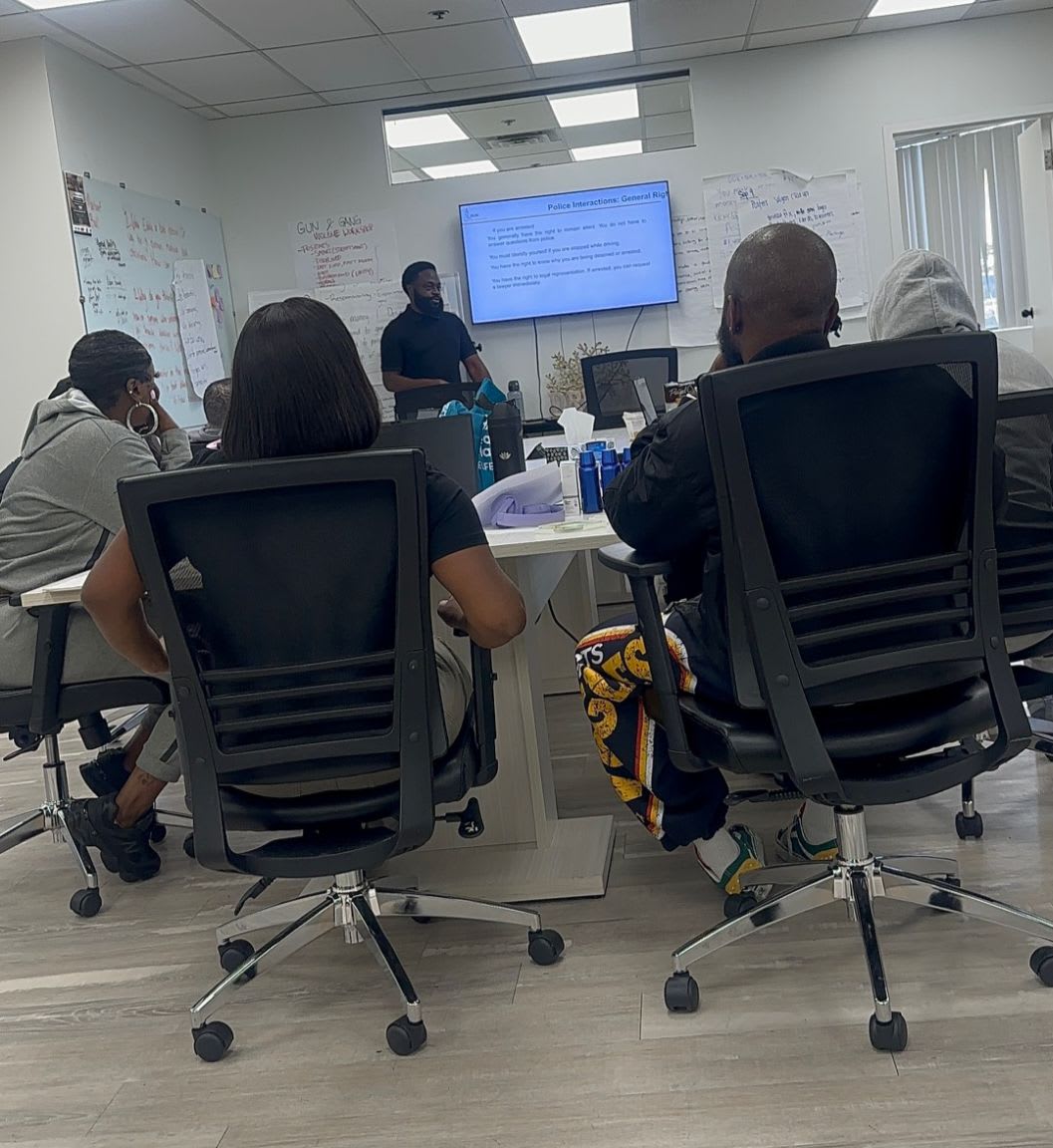 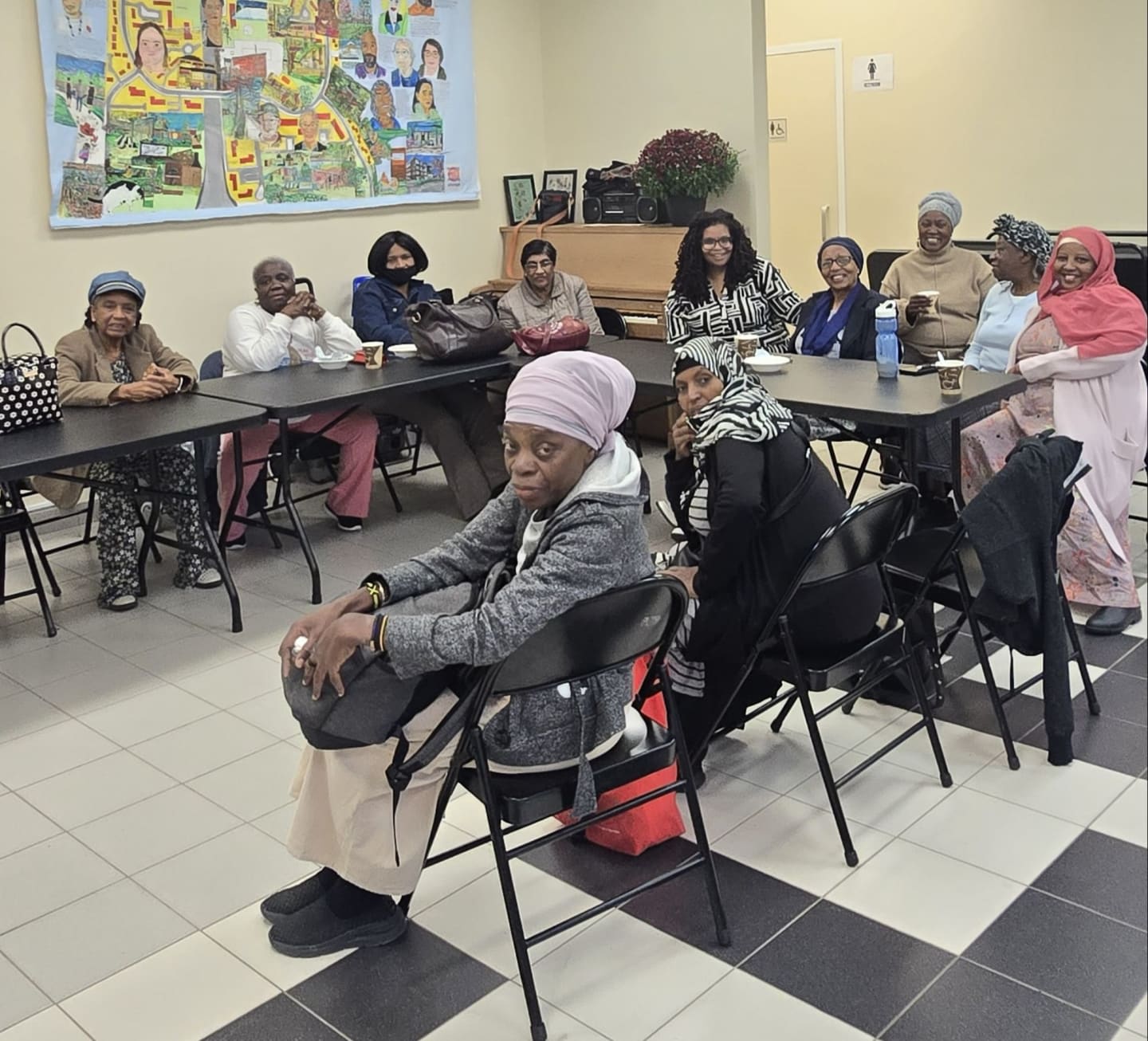 Chuks delivers a public legal education session with Think 2wice on human rights and legal protections for system-impacted community members. Right: Shevaun delivers Renting While Black: Housing Rights, Anti-Black Racism & Your Home in partnership with Akwaaba Community Services. Black Circle of Care Initiative Continues  NOTICE & OPPORTUNITIESBLAC’s 2026 Annual General Meeting A reminder that BLAC’s 2026 Annual General Meeting will take place on October 28, 2026. Members are encouraged to review the AGM notice previously circulated for meeting details, deadlines and information about participating. Interested in Joining BLAC’s Board? BLAC is currently accepting nominations to fill five vacancies on our Board of Directors. If you’re interested in contributing your experience and perspective to BLAC’s governance and future direction, we encourage you to consider applying. Nominations close October 21, 2026. We’re Hiring: Bilingual Reception & Casework Support Assistant BLAC and Community Legal Services of Ottawa are hiring a Bilingual Reception and Casework Support Assistant for a permanent, full-time position in Ottawa. This shared role will support client intake, referrals, casework administration and the day-to-day operations of both community legal clinics. French is required. Salary: $50,000 + health benefits and pension contributions Career Opportunity: Paralegal Community Legal Services of Ottawa is also hiring a Paralegal for a permanent position focused primarily on income support and housing law, including tenant duty counsel work before the Landlord and Tenant Board. Applicants must be licensed and in good standing with the Law Society of Ontario. Salary: $65,000–$69,500   Please feel free to share our news with your friends and family, and reach out with any questions, comments, or concerns. To learn more about our work, visit our website or follow us on social media |