  Notes from the Field / Fall 2026 Welcome to fall! Daytime low tides slip away, bull kelp forests transition from macroscopic to microscopic as they grow and then senesce, and abalone and oysters reset after many months of spawning. At Puget Sound Restoration Fund (PSRF), our summertime scurrying around Puget Sound’s bays, inlets, and reefs now slows. We turn to the year ahead, tend to hatcheries and dive gear, and connect with others at various celebration events (more below!). For now, enjoy recent updates: an Olympia oyster restoration flex, snorkeling to connect salmon to kelp, community science for Dungeness crab, and beach time to boost shell recycling. Our thanks for being part of the PSRF endeavor in so many ways! 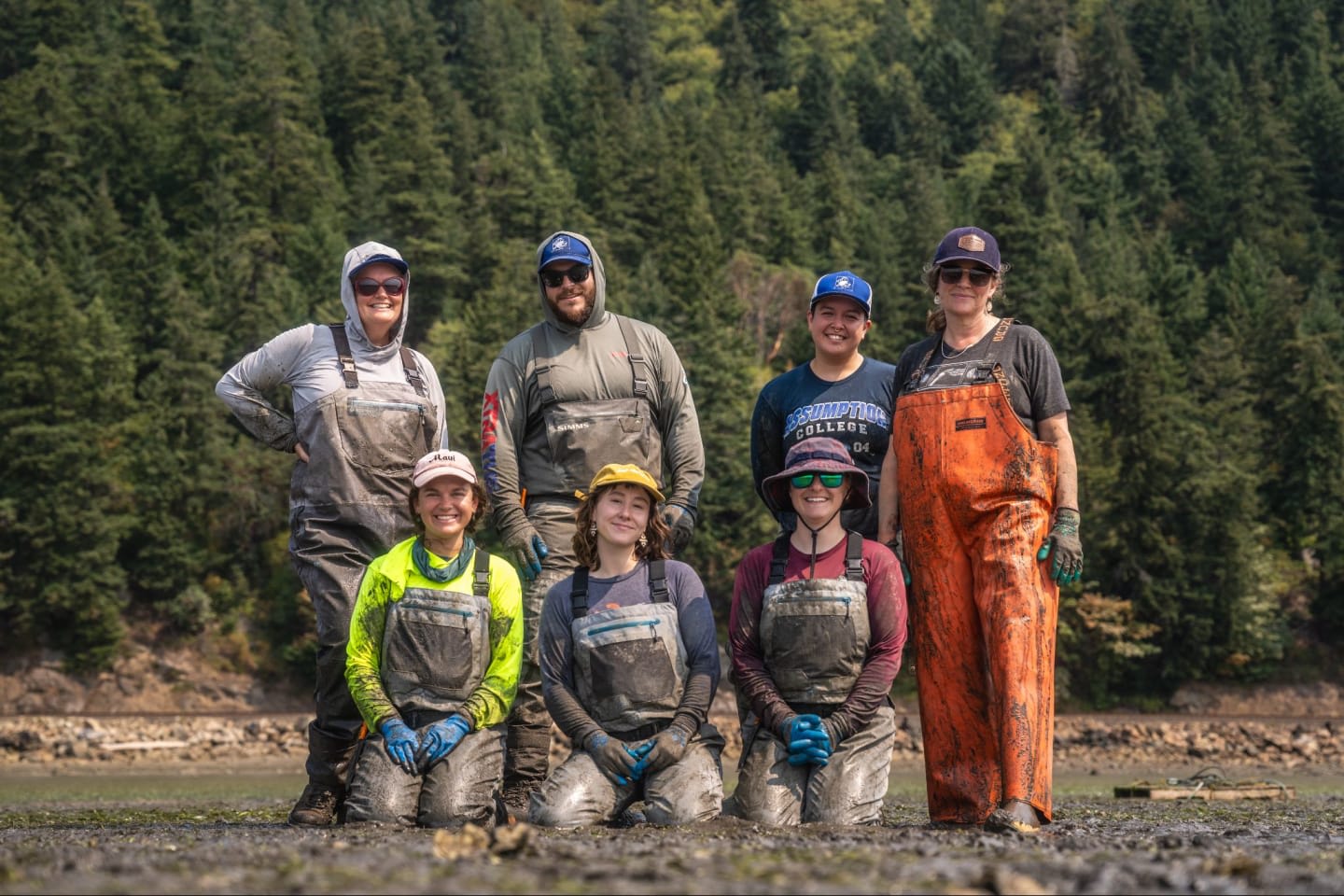 Muddy PSRF smiles in Samish Bay on the path to 150 acres of Olympia oyster restoration. Credit: Scott Kranz Dates for Saving 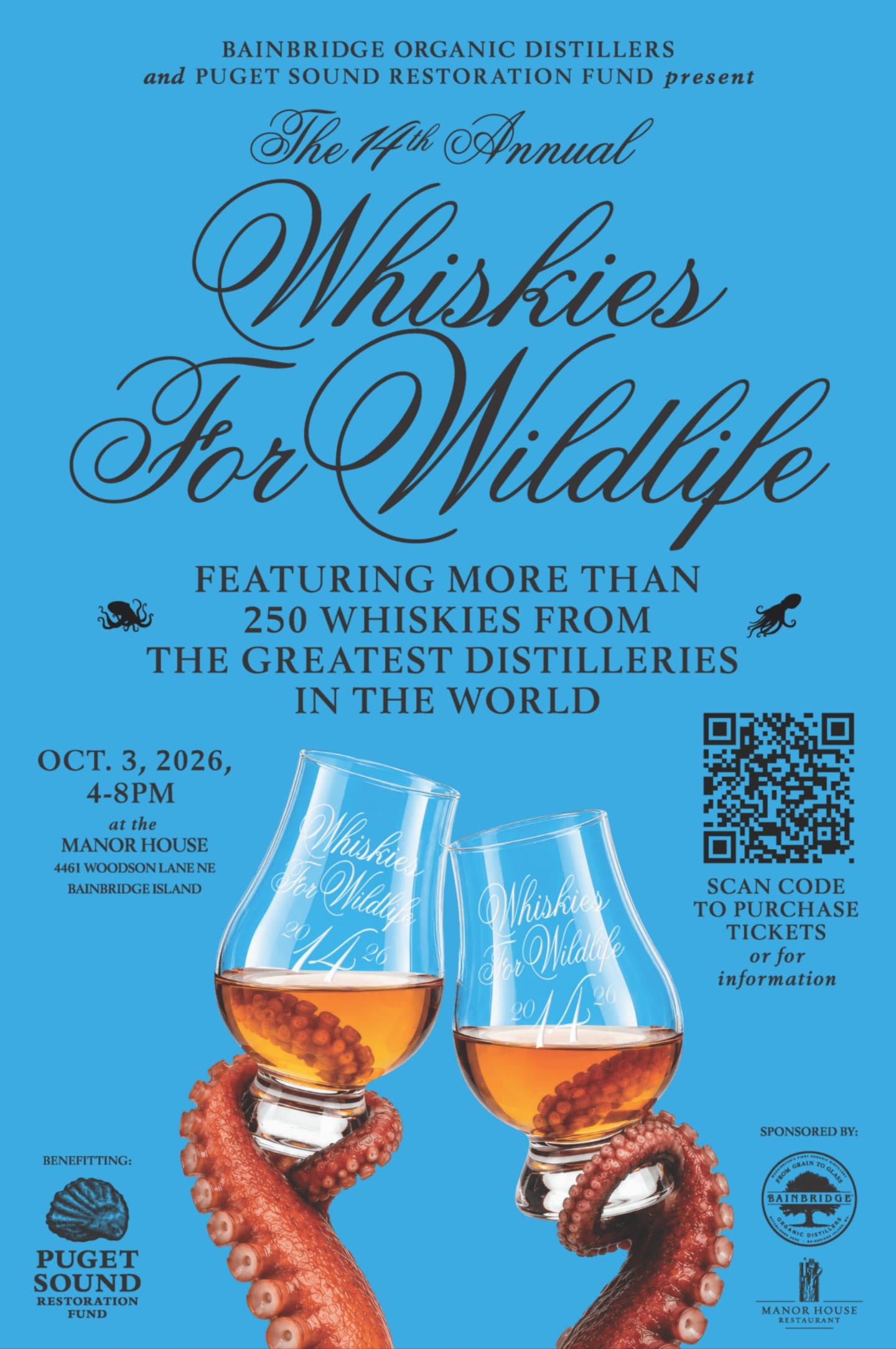 Saturday, October 3 Last chance! Don't miss the incomparable Whiskies for Wildlife at The Manor House on Bainbridge Island. $350 per ticket, with shuttle available to and from the ferry (limited capacity). October 4-7 Be part of the 2026 International Conference on Shellfish Restoration in Shelton, WA, co-hosted by the Squaxin Island Tribe and PSRF. Saturday, November 7 Don't miss Oyster New Year at Elliott's Oyster House (Seattle). Nab tickets now! Big Gains for a Small Oyster In a restoration flex, we are a sliver away from completing 150 acres of restoration work for our diminutive native oyster - the Olympia oyster. In Samish Bay, volunteers prepared hundreds of bags filled with clean, Pacific oyster shells, which Taylor Shellfish then deposited in the Bay at Jerry’s Bar. Our team then arranged the bags in a starburst around our thriving restoration site. Over the next year, the bagged shell will provide homes to larvae released by our restored oyster patch. Hundreds more bags of Oly-laden seeded cultch were delivered to PSRF partners to boost native oyster populations and rebuild habitat in Hood Canal, North Chuckanut Bay, and Triangle Cove. In more good news, at restoration sites new and old, we are seeing exponential growth of Oly populations. Our teams have been out monitoring Dogfish Bay in Liberty Bay (restoration actions 2000-2011), Oyster Bay in Dyes Inlet (2011), and Sinclair Inlet (2019). Where there were only handfuls of Olys at the start of this millennium, restoration sites now teem with millions of Olys, humming away doing their part to restore the ecosystem. The oysters are filtering water, providing vital prey and refuge for salmon and crab, and serving once again as foundational habitat. Our thanks go to the Tribes, federal and state agencies, commercial shellfish growers, other nonprofits, corporate sponsors, tideland owners and communities who continue to play a huge part in Oly rebuilding. 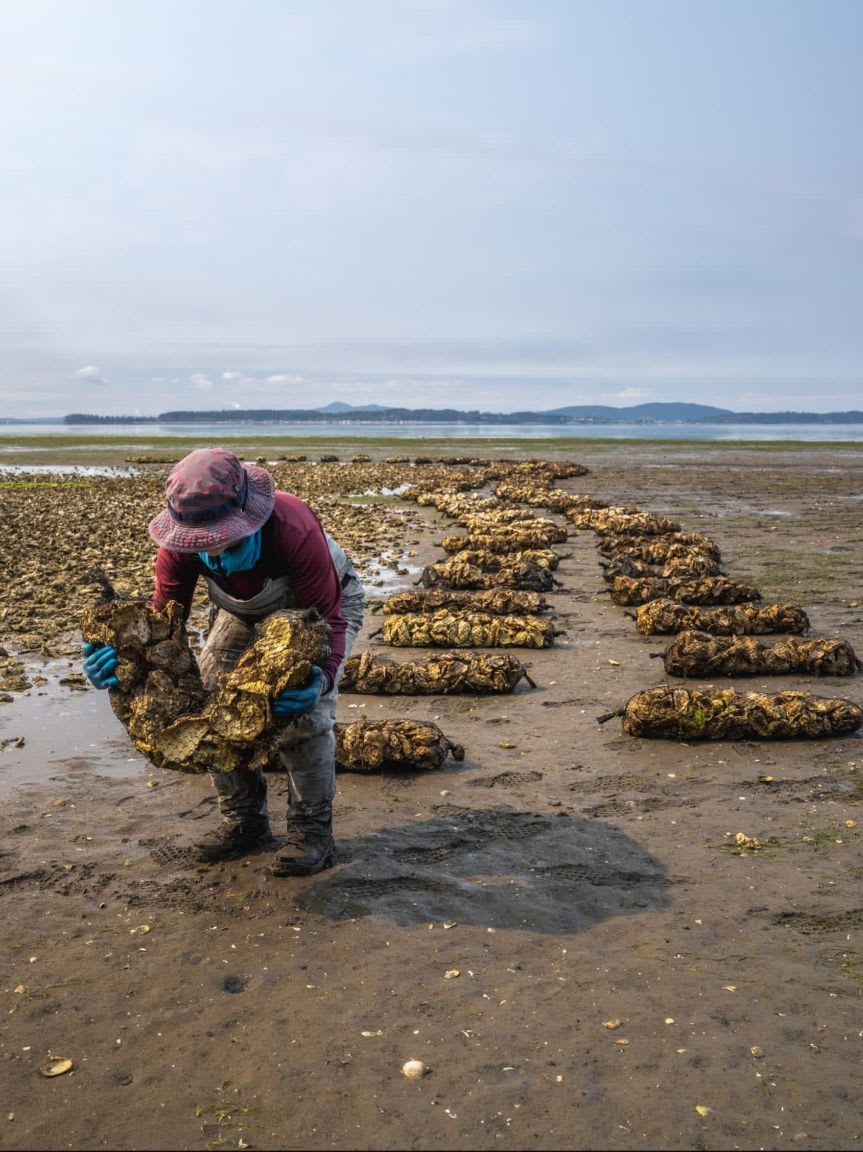 Intrepid PSRFer Kari Inch expanding the Oly restoration site in Samish Bay by placing bags of bare shell. Credit: Scott Kranz How Salmon-y are our Marine Forests? Many a fisher will tell you where to catch salmon: go to the kelp. But how strong is the connection between young salmon and kelp forests? That very question has us donning our snorkel gear as part of an exciting new project led by the University of Washington, in partnership with Vashon Nature Center, Port Gamble S’Klallam Tribe, Puyallup Tribe, Coastal Watershed Institute, and Friends of the San Juans (funded by Puget Sound Partnership). Our big team has been dipping masks and fins in at sites across Puget Sound and the Strait of Juan de Fuca, collecting data on how many juvenile salmon we see and what they are doing, inside and outside of bull kelp forests. Are the salmon there? They sure are, along with a cast of characters including the ubiquitous perch, young-of-year rockfish, spiny dogfish, squid, and even some anchovy. Filling this knowledge gap is vital, given salmon’s importance. It’s also just good fun. 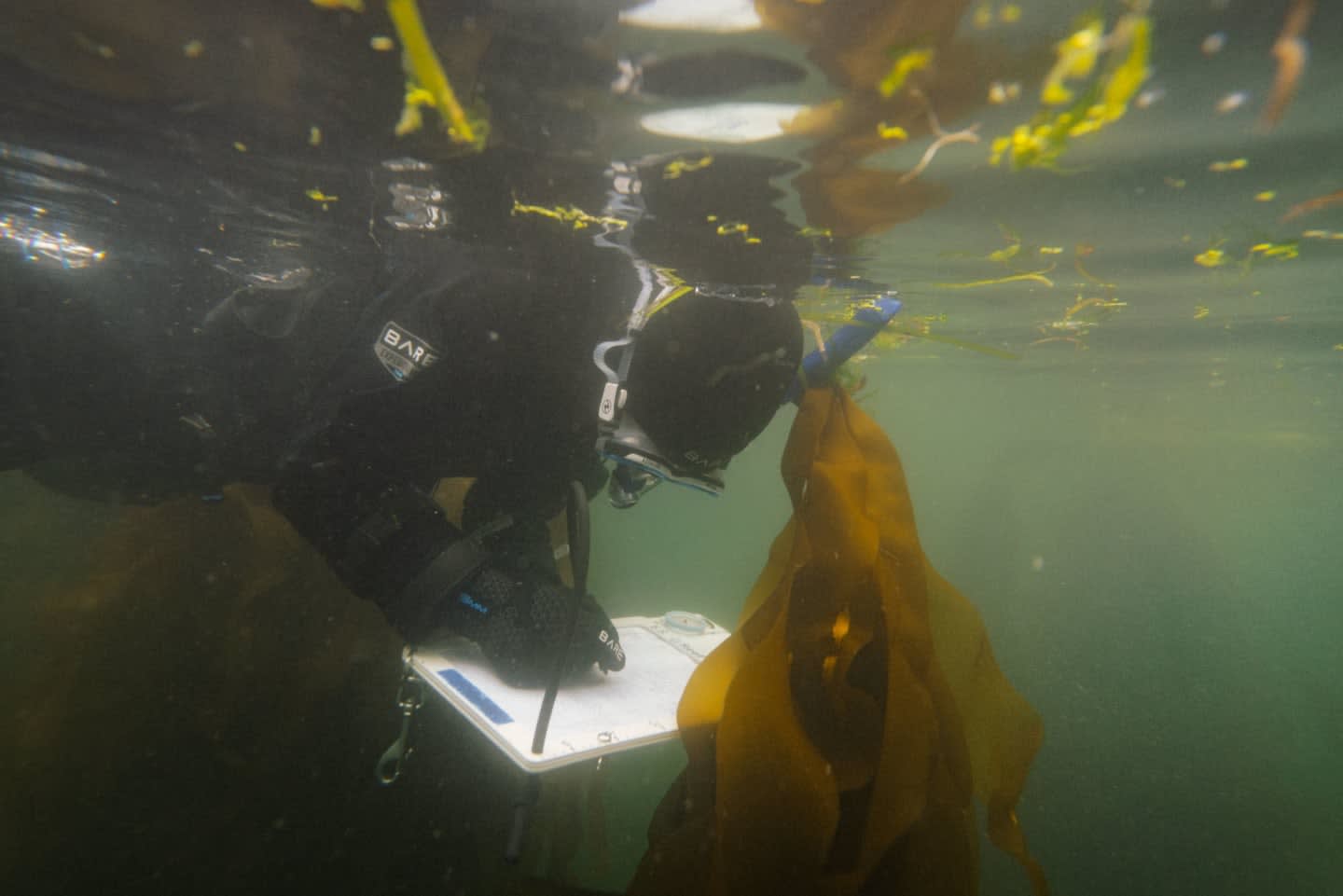 One fish, two fish... PSRF diver logs counts of salmon, forage fish, and more amidst bull kelp fronds. Credit: Adam Wells Lighting the Way for Dungeness Crab For one of the Pacific Northwest’s most iconic and cherished native species - Dungeness crab - the path towards sustainability may just start with a light, a spoon, and a microscope. For the past 8 years, members of the Pacific Northwest Crab Research Group (PCRG) have systematically deployed light traps off of docks and piers throughout Puget Sound each spring through early fall. In doing so, we can track when, where, and how many Dungeness crab larvae pulse through our big inland sea. And that information may be the key to unlocking an even more important number - how many adult Dungeness are here each year. Our 2026 season is nearly a wrap: 20 sites in Puget Sound, and close to 30 at our sister program in British Columbia. In 2021, PSRF gladly agreed to officially host PCRG. As the umbrella organization, PSRF serves as a third party organization who can equally support state and tribal co-managers. There are a bevy of ways to learn more: read the 2025 PCRG annual report, the Winter/Spring 2026 newsletter, the network’s first peer-reviewed manuscript, and/or this news article; or settle in and have a listen to this podcast.  PSRFer Ally Galiotto pulls the light trap at Shilshole (left), spoons up the tiny Dungeness crab megalopae (middle), and takes to the scope to further investigate (right). Credits: Adam Wells Back to the Beach Bash for Shell Recycling   Beach appreciators descend to Back to the Beach Bash on a glorious summer day (top); doing the hard work of making spent shell (left). Credits: Adam Wells PSRF’s Back to the Beach Bash was a smashing success! For the 4th time, Baywater Shellfish hosted this event at their exquisite farm on Thorndyke Bay. Enthusiasts enjoyed a rich seafood bounty, crafted shells into Etsy-worthy wares, and went above and beyond to support PSRF’s newest pilot project - shell recycling. At shell recycling programs elsewhere in the US, oyster shells from restaurants are collected, cleaned, and re-used for restoration. It’s a win-win: boost a dwindling supply of shell, keep shells out of the landfills, and more. To work, shell re-used for restoration must be free from diseases or unwelcome invasive species nestled into the shell’s nooks and crannies. In Washington - the nation’s leading producer of shellfish - if we are to reclaim shell through shell recycling, it is vital to get this right. Over the past year, PSRF and a team (including regulators) have crafted and tested protocols at shellfish-centric events and through continued collection at Elliott’s Oyster House. The ~7,000 lbs. of shell we have amassed now sits and waits. For the next 18 months, it will be cleaned by rain and bleached by sun, until we verify that it is safe for reuse. Until then, we’ll nab more shell, evolve our practices, and look ahead. Thanks enormously to Beach Bash-ers, Coastal Conservation Association-Washington, Ash Grove Foundation and others for the support. Finally, remember that it's illegal to dump shell in Washington waterbodies without a permit. This helps keep diseases and pests from being introduced. Dive Into Our Latest News Recent publications showcase the impact of our programs here and elsewhere. Welcome! Our Board of Directors gained a wonderful new member - Fran Wilshusen. Originally from Maine, Fran found her way to the shores of the Salish Sea decades ago. Since then, she has thoroughly steeped herself in this place, through her role as longtime Habitat Services Director at Northwest Indian Fisheries Commission, and as an engaged member of her south Puget Sound community. Welcome to Jasmine Tomasetti, PSRF's new Pinto Abalone Technician! After wrapping up a successful year at our hatchery as a Washington Conservation Corps intern, we're thrilled Jasmine will continue putting her conservation skills to work in her new permanent role supporting PSRF's pinto abalone grow-out program. Connect Know someone who would love to receive this newsletter? Forward this email so they can easily sign up to get PSRF news straight to their Inbox. If you'd like to get more involved — through volunteering, sharing our story, or partnering — please reach out! |