May 29, 2026 LEGAL NEWSHousing, Homelessness, and Human Rights: Lessons from the Waterloo Encampment Decision By Raianna Wedemire-Peart, paralegal at BLAC
In City of Waterloo v. Persons Unknown, 2025 ONSC 1572, Justice Michael Gibson emphasized that unhoused individuals have Charter-protected rights and that governments should not simply remove people from encampments without providing meaningful alternatives and solutions. The ruling comes amid ongoing debates about homelessness and encampments across Ontario. While Premier Doug Ford criticized the decision as “ridiculous,” the judgment reflects a growing recognition that housing instability and homelessness engage fundamental rights and dignity interests. Although the case does not directly change the Residential Tenancies Act, it may influence how decision-makers approach housing-related disputes. The decision highlights the real-life consequences of eviction and homelessness and reinforces the importance of considering hardship and vulnerability when making housing decisions. This is particularly significant for low-income Black communities, who continue to face disproportionate rates of poverty, housing insecurity, discrimination, and homelessness as a result of systemic anti-Black racism. Black tenants are often overrepresented in eviction proceedings and may face greater barriers when accessing stable housing, shelters, and social supports. By recognizing unhoused individuals as rights bearers entitled to dignity and protection, the ruling supports a more human rights-based approach to housing. It may strengthen advocacy efforts aimed at preventing homelessness, reducing evictions, and ensuring that the impacts of systemic racism are meaningfully considered in housing-related decisions. As Ontario continues to grapple with a housing and affordability crisis, decisions such as City of Waterloo v. Persons Unknown remind us that addressing homelessness requires more than enforcement measures. It also requires meaningful efforts to address the social and structural conditions that place people at risk of losing their housing in the first place. When Is a Medical Note Not Enough? Lessons from Baker v. Firon Roofing Inc. By Samantha Brown, Administrative Assistant at BLAC
A recent Human Rights Tribunal of Ontario (HRTO) decision highlights the important role medical documentation can play in disability accommodation and discrimination claims. In Baker v. Firon Roofing Inc., 2026 HRTO 292, an employee alleged that she was laid off and not recalled to work because of a disability and medical leave. Although her doctor provided notes stating that she was “totally disabled,” the HRTO ultimately dismissed the application. The Tribunal found that the medical documentation was too general and did not provide enough information to establish a disability under the Ontario Human Rights Code (“Code”). The employer also provided what the Tribunal accepted as a legitimate, non-discriminatory explanation for the layoff and subsequent restructuring. Medical notes should provide meaningful information The Tribunal found that the doctor's notes did not identify a medical condition, diagnosis, or workplace restrictions. As a result, the notes were not enough to establish a disability under the Code. The decision suggests that medical documentation should provide enough information to help establish the existence of a disability and any related workplace limitations that may require accommodation. A disability claim must be supported by evidence The Tribunal relied on previous HRTO decisions, including Crowley v. LCBO, which confirmed that a disability claim must be supported by evidence such as a diagnosis or clinically significant symptoms identified by a healthcare professional. Simply stating that an employee is unable to work may not be enough to establish a disability under the Code. Why This Matters While the decision focused on the evidence before the Tribunal, it also raises broader questions about access to healthcare and diagnosis. Black individuals continue to report barriers within healthcare systems, including having symptoms dismissed, delays in diagnosis, and challenges accessing appropriate care. These barriers can have real consequences when medical documentation is required to support workplace accommodation requests, disability benefits, or human rights claims. Research cited in Prioritizing Black Canadians with Disabilities in Bill C-22, Canada Disability Benefit Act found that 14.2% of Black Canadians aged 18 and older reported their health as fair or poor, compared to 11.3% of White Canadians. The rate was even higher among Black women, at 15.0%. The same report highlights that Black Canadians with disabilities may face additional barriers when accessing services and supports. It notes that behaviours associated with disabilities such as PTSD, epilepsy, and autism may sometimes be viewed through the lens of racial stereotypes, creating further obstacles to obtaining recognition, support, and accommodation. These findings suggest that Black Canadians may experience poorer health outcomes while also facing barriers to obtaining the medical assessments, diagnoses, and documentation often required to access workplace accommodations and legal protections. For individuals living with disabilities, these challenges can create an additional hurdle: proving the existence of a disability may depend on documentation that is not always equally accessible to everyone. Although the Tribunal's decision was based on the facts of this particular case, it serves as a reminder that access to healthcare, diagnosis, and disability recognition is not experienced equally by everyone. INTIATIVESBLAC recognized In Federal Victims Fund Announcement During Victims and Survivors of Crime Week, the Department of Justice Canada highlighted organization across Ontario receiving support though the Federal Victims Strategy's Victims Fund. As part of initiatives supporting Canada's Black Justice Strategy, BLAC was recognized for its work provding culturally specific supports to black victims and survivors of crime. The announcement highlighted BLAC's one on one counselling, healing circles, and referrals to community-based services. The recognition reflects the growing importance of culturally responsive approaches to victim support and the role community organization play in helping individuals navigate healing, recovery, and access to justice. BLAC remains committed to supporting black communities through advocacy, education, refferals and initiatives that promote healing and empowerment. Black Circle of Care Initiative Continues 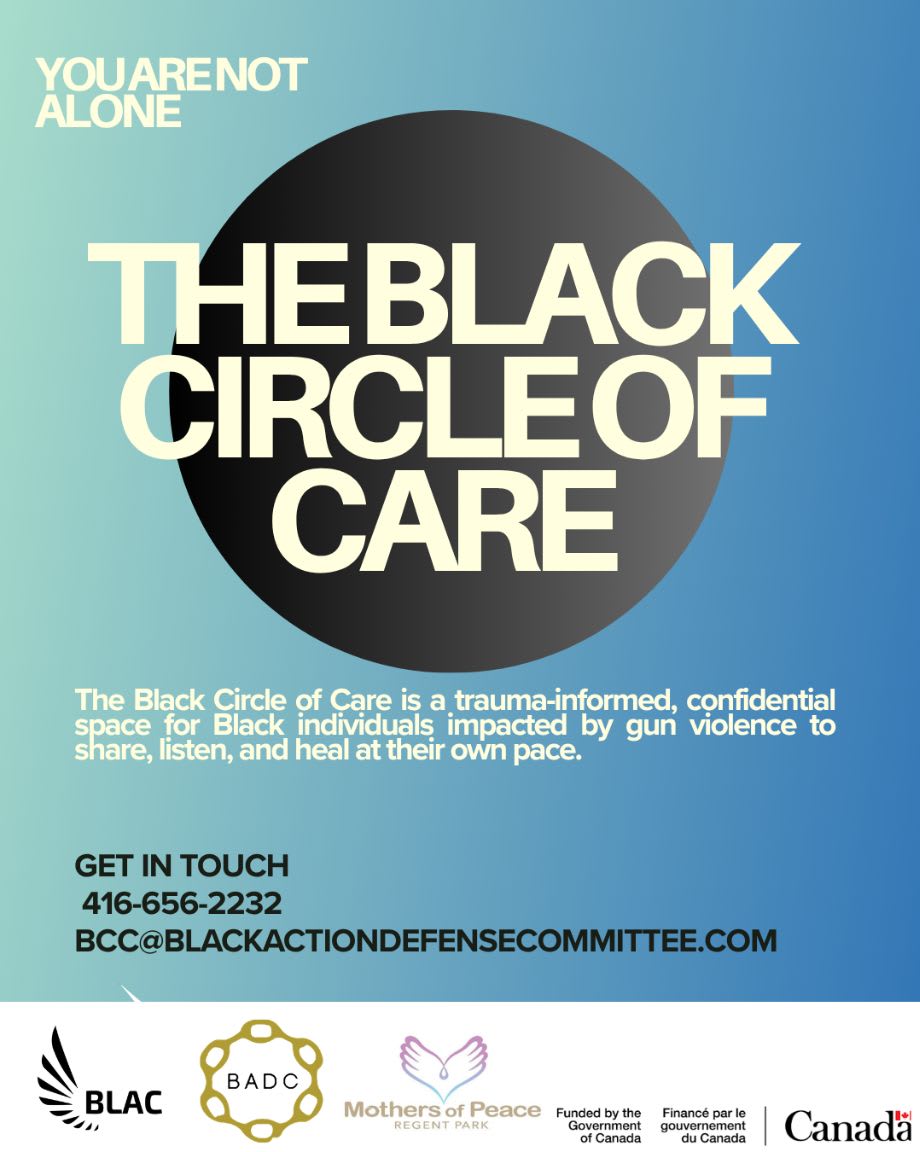 Building Capacity Through Human Rights Education From May 12-24, BLAC Staff lawyer Zainab Adewusi and Paralegal and Intake Coordinator Shevaun Pierre organized a three- day virtual learning series in partnership with Kensington-Bellwoods Community Legal services, the Neighborhood Group community Services, and the Onatrio Justice Education Network. Designed for new community legal clinic staff and law students, the series provided practical training on Ontario human rights law and the skills needed to support individuals navigating the human rights system. Participants learned from experienced lawyers and advocates, including Nana Yanful, former Founding Legal Director of BLAC, Atrisha Lewis, Todd Pribanic-White, and Runako Gregg, who shared their expertise and practical experience in the field. The series helped stregthen participants understanding of human rights law while building the cpapacity of future legal advocates and community workers across Ontario. Thank you to the Association of Community legal Clinic of Ontario for Funding this initiative. NOTICE AND OPPORTUNITIESEarly Office Closures During FIFA World Cup Matches   Please feel free to share our news with your friends and family, and reach out with any questions, comments, or concerns. To learn more about our work, visit our website or follow us on social media |