View in browser


St. Vincent de Paul Society

organization logo

Archdiocese of
Santa Fe

June 2026 Newsletter

Vincentian Celebrations: June 

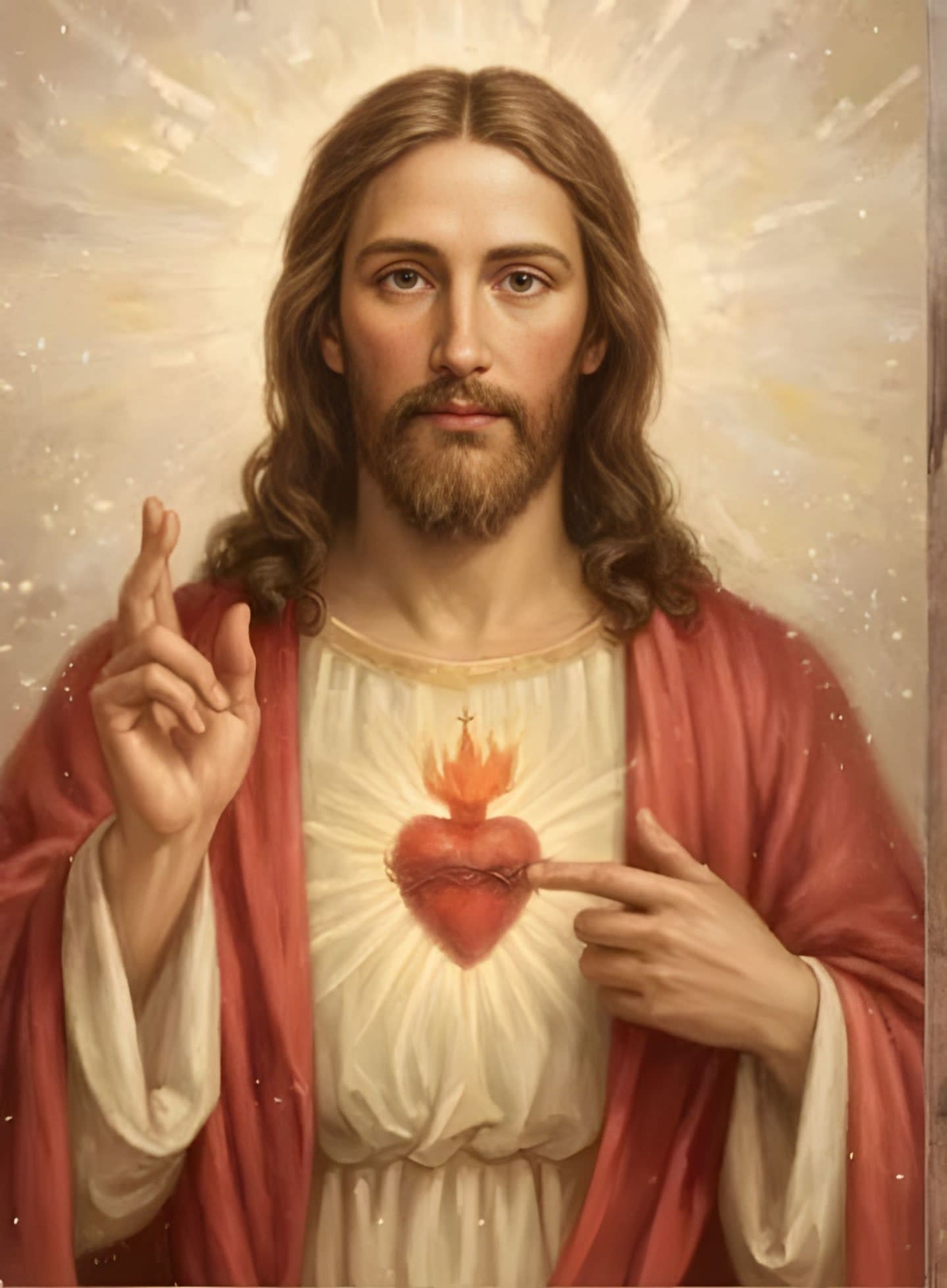
Feast of the Sacred Heart – The Society of St. Vincent de Paul has been solemnly consecrated to the Sacred Heart of Jesus since February 5, 1872 when, at the request of the Society, an Act of Consecration was drawn up and is renewed annually by all units of the Society. 

Pope Leo XIV Prayer Intentions: June

For the values of sports.

Let us pray that sports be an instrument of peace, encounter, and dialogue among cultures and nations, and that they promote values such as respect, solidarity, and personal growth.

A Note of Gratitude for Your Prayers

Dear Fellow Vincentians,


I am sending a heartfelt “thank you” for all the prayers for our son. The surgery was a success, and the tumor was removed. Although he did lose his eye and most of his facial bones, his medical team told us, “Scott is a living miracle.”


The power of prayer is real, and through the grace of our Lord and Savior, along with the many prayers lifted for him, Scott is still with us and continues to fight forward with strength and hope. Scott will begin chemotherapy and radiation next week. We know there is a long road ahead, but we are ready; Jesus, we trust in You.


Again, we want you all to know how deeply grateful we are for the prayers, kind words, love, and support we have received. Your compassion has carried us through some very difficult days.


Sending Vincentian love and blessings to you all.

Denise and John Brunner

VISION SVDP Phase III

We extend our thanks to the 20 Vincentians who participated in the Vision Phase III Workgroups. Ed Chavez of St. Bernadette Conference and Steve Brady of the Incarnation Conference will be the Santa Fe Council Delegates at the Vision Congress in August. Together with the other delegates from across the country, they will define and prioritize a specific set of recommendations with a national impact. These would lead to projects as well as potential structural changes related to each core area that the National Council will execute over the next three years. This further work will necessitate our local Vincentians' involvement in these projects.  

Please thank them for their Servant Leadership.  

Q&A Section

Question:

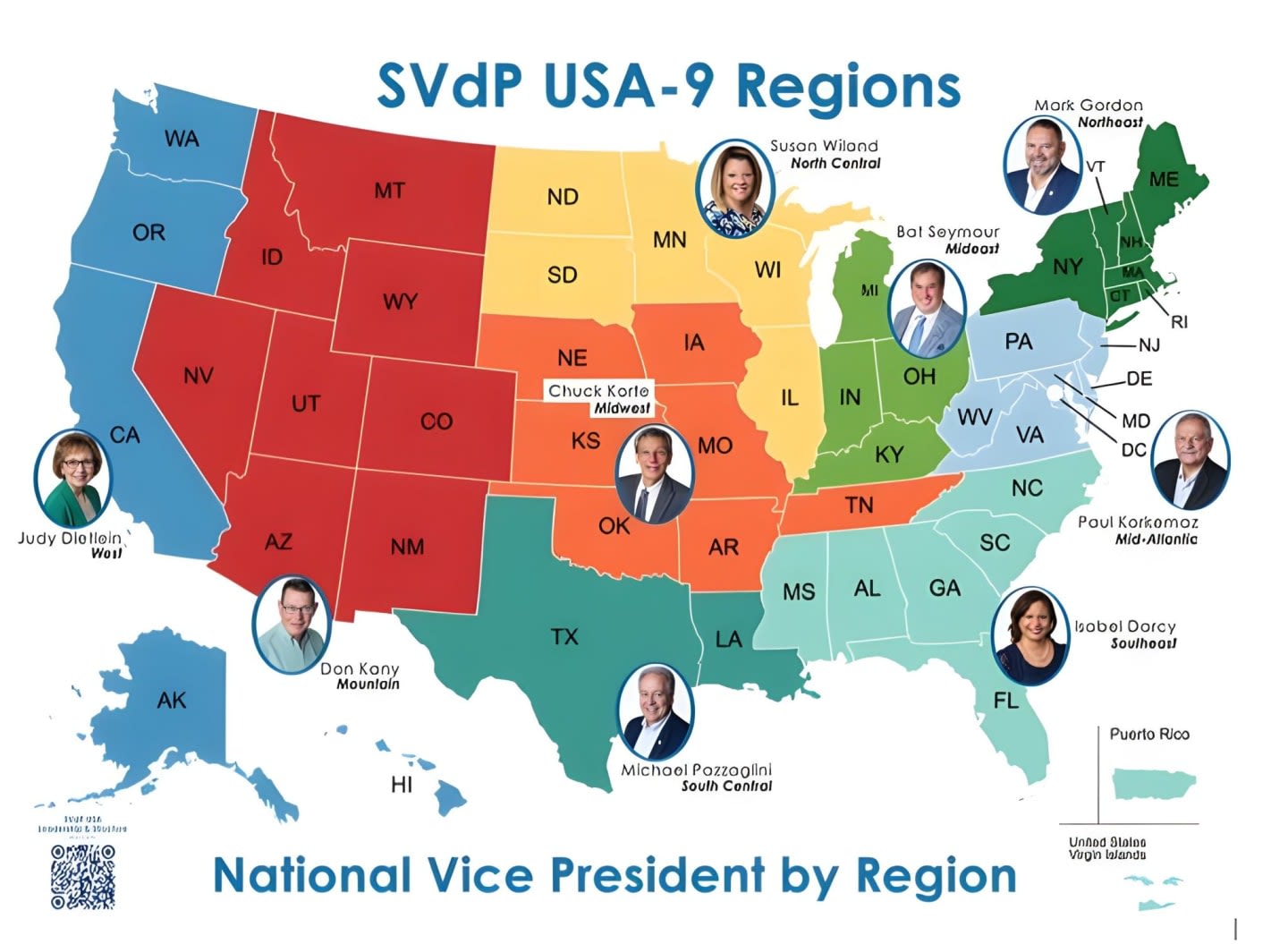
What region are we in? Who is our regional Vice President?


Answer: We are in the Mountain Region and Don Kany is the regional VP.


https://ssvpusa.org/about-us/leadership/

UPCOMING EVENTS

FY25/26

Board meetings take place every other 3rd Friday of the month. 


All Vincentians are welcome to attend.


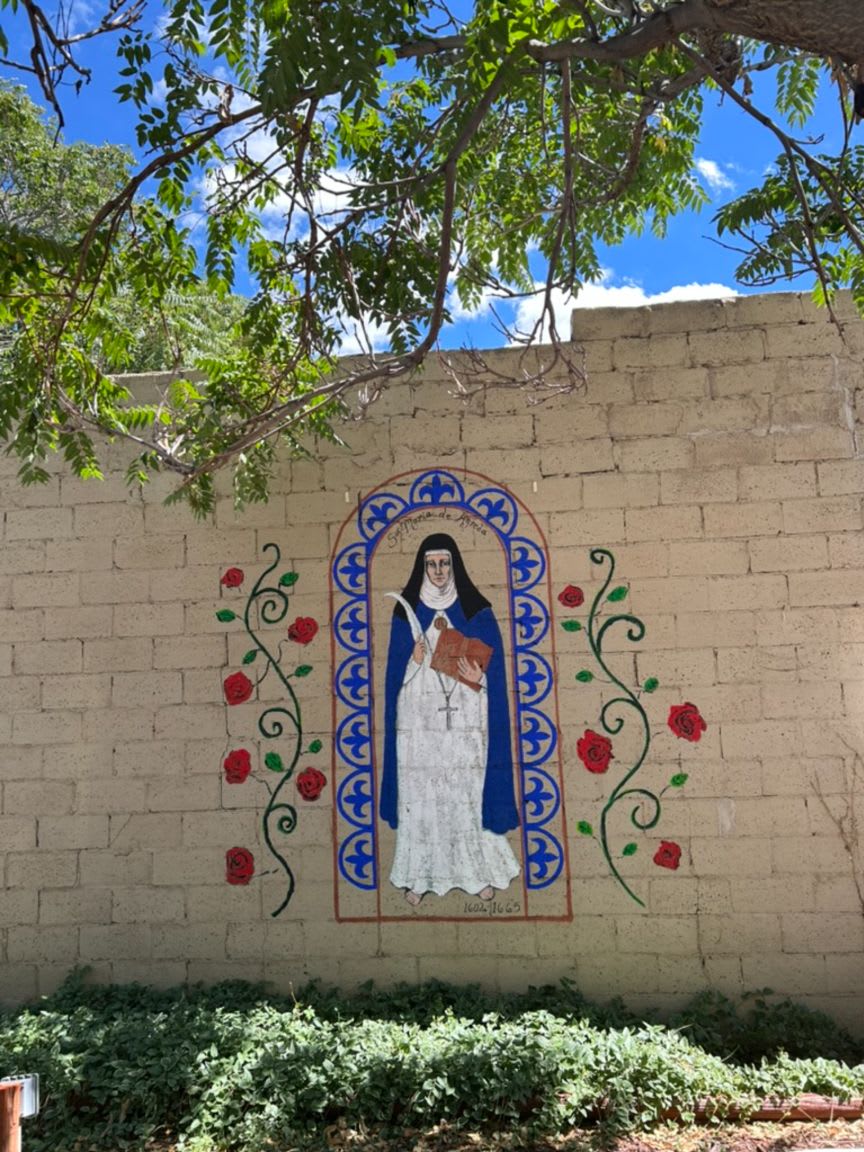
(Pictured above: Beautiful outdoor area and painting at the Mountainair SVdP Thrift Store.)


  • July 17 - Board Meeting
  • July 25 - Ozanam in Abiqui
  • September 18 - Board Meeting
  • September - Ozanam Sacred Heart Española - Date TBD
  • November 20 - Board Meeting

If your District Council or Conference has special event dates, please send them to me at ljstrasburg@gmail.com so we can include them on our calendar.


The Bookshelf

Childhood Disrupted: How Your Biography Becomes Your Biology, and How You Can Heal

By Donna Jackson Nakazawa


The emotional trauma we suffer as children not only shapes our emotional lives as adults, but it also affects our physical health, longevity, and overall well-being. Scientists now know on a bio-chemical level exactly how parents' chronic fights, divorce, death in the family, being bullied or hazed, and growing up with a hypercritical, alcoholic, or mentally ill parent can leave permanent, physical "fingerprints" on our brains.


These imprints are termed Adverse Childhood Experiences or ACES. The impact of ACES are linked to chronic diseases such as diabetes, cancer and heart disease, depression, anxiety and suicide attempts. They can also disrupt brain development and social-emotional functioning. When we learn about ACES, we may have the opportunity to improve the lives of children and adults in a variety of ways.


                  -Strengthen families’ financial stability

                  -Promote norms that protect against violence

                  -Work with parents to help kids have a good start

                  -Demonstrate healthy relationships

                  -Connect youth with caring and adults and positive activities


From the Executive Director:
Ethical Storytelling

Telling stories is exciting and compelling work—an essential piece of communicating mission and impact for any non-profit. I recently had the pleasure of attending the virtual Ethical Non-Profit Summit where the focus was on Ethical Storytelling.


Though the presenters didn’t use this language, you could say that we were considering the question of how to honor the Imago Dei in each person when sharing their personal stories. At SVdP, we place a high value on the individual and see all of our neighbors as reflecting Christ. So how do we most honor that image in our storytelling?


Here are some tips from the conference (though certainly not a complete best-practices list) that are relevant to our work as we gather and tell stories through words, photos, and video:


1) Always get consent from the story-owner before sharing a story.


The organizer of the summit, Diana Farias Heinrich, shared a powerful experience that led her to explore sharing stories as ethically as possible. When she was a young professional working in the non-profit development space, she freely shared the stories of 10 graduates from her organization’s programs—detailed, personal information. She later overheard a co-worker mention that one of the graduates that had been featured far and wide online had been a survivor of domestic violence, and her abuser was being released from prison in the coming days. Diana experienced panic, fear, and shame. She had shared identifying information that could come back to impact this program participant.


Diana shared about trying to undo the damage through deleting social media and internet posts while also knowing that, once something is shared online, it can never completely be recalled. Thankfully, I don’t believe any harm came to that graduate due to Diana’s actions.  The experience ultimately set Diana on a path of seeking a better way to share stories. How can we share in ways that value and honor our neighbor with clarity on how, where, and for how long those stories will be shared?

At SVdP, we have a media form that we use regularly as an agreement to record consent for sharing photos and video media. This is a starting point for sharing any visual story.


2) Change details—no identifying information (unless previously arranged)


It is best practice, even when sharing stories within your Conference, to protect the story-owner’s identify. If you are sharing out a list to just your Conference for informational purposes, it is best not to use last names or to just use initials. You never know who may know someone on the list, and we want to always protect confidentiality.


Unless you have express permission to share someone’s story using their real name and full detail, when sharing stories publicly, it is recommended to change names and any identifiers. Composite stories are also an option, where you are changing names and identifiers but also combining several stories as an extra measure of protection of confidentiality.


Even when we change names and details, we should still gather consent to share a person’s story in any capacity.


3) Dignity over deficit


Have you ever read an impactful story from a non-profit and then stepped back and wondered if the person highlighted in the story might end up feeling like the darkest seasons of their lives were just put on display for the whole world? Likely, few of us would want our most personal lows highlighted so that an organization can be elevated. Traditionally, many non-profits have used deficit-based narratives that focus on the hardship of someone’s circumstances and how the organization came in to save the day.  


At this conference, we explored another way of honoring our neighbors and telling the story of our work: dignity-based narratives that focus on the strengths, resilience, and innate worth of the person. But how do we do this?


A starting point is to involve the story owner in the process of telling their story. Let the owner guide the process and shape the final product. We can share why we are writing the story, what we hope to do with it, and where it will be distributed. But let’s leave room for the story owner to shape how they tell their story. Then, before publishing a story, let’s loop back to the story owner to make sure we are reflecting their experiences and story accurately and to their liking.


Here are a few questions from Maria Bryan (who focuses on trauma-informed storytelling) that can get us on the right track with dignity-based interviewing:


-What parts of your journey with us are you most proud of?

-What was your goal for taking part in the program? What were you hoping to get out of it?

-How has the program impacted your life?

-What’s the best part of your life right now?


4) Consider how you would want your story shared


Diana Farias Heinrich’s life was forever changed by her experience of over-sharing without consent, only to find out that the story-owner could be in danger due to her actions. She has dedicated her life’s work to helping others to avoid that same mistake.


One presenter at the conference encouraged us: “Remember, when you are telling stories, it could be your story. Treat people the way you would want to be treated. At any point in time, it could be your story.”


How would Diana’s initial story sharing have been impacted had she considered how she would want her story shared if the roles were reversed and she was the program participant being highlighted? How will our story sharing be impacted by that same question? If each of our neighbors in need reflects Christ in real and unique ways, they deserve intentionality, care, and safety when partnering in the sharing of their stories.


At SVdP-ASF we have a network of 800 Vincentians. We all do the regular work of meeting people where they are--often in their homes--to hear their stories, provide support and comfort, and pray. We all hold precious, sacred stories in our minds and hearts because of the trust established through a compassionate visit. While SVdP has officially been involved in the Archdiocese of Santa Fe for 35 years this coming September (!), we are taking new steps towards telling our story—which involves sharing about Conference work, Special Works, and, when permission is granted, neighbors’ stories as they intersect with SVdP. Let us continue to work to share our neighbors’ stories in a way that highlights Christ in them—dignity, honor, and the fullness of grace.

Vincentian Interview Spotlight: Jeri

Telling our Vincentian story is a big part of connecting with neighbors in need, recruiting future Vincentian, and opening ourselves to funding. As many in our network often say, “St. Vincent de Paul is the best kept secret of…[insert your noun: the Catholic church, the community, the non-profit world].” We want to change that!


If you attended the All-Conference Meeting last month, you may have seen me (Jared) running around with a camera asking for Vincentians to answer some questions about the Vincentian experience. I'm so grateful for those that took the time to talk to me about what it means to be a Vincentian. Jeri's video is the first to be released on social media in a series. I'm always encouraged to hear Vincentians speak from the heart about their faith, passion, and motivations for service.


ASF Council Board Members

Linda Strasburg – President

Dawn Miller – Vice President

Governance and Twinning

Larry Gonzales – Treasurer and CFO

Trish Novak – Secretary

Linda Stubbs – Spiritual Advisor

Barb Garrity – DC A

Margaret Trace – DC B

Gerry Rohrkemper – DC C

Marie Kemmeren – SW DC

Dorothy Duran – NW DC

Mark Sadowski – Santa Fe DC

Jared Weatherholtz - ED 


A Prayer to the God of Justice

God of light and truth,
You have made us your people,
and entrusted us with the mission to be salt and light in the world.
Teach us not to be afraid of the noise of the streets,
or the tensions of political life.
Give us courage to speak with love,
to act with justice,
and to stand with the poor and the voiceless.
May our faith be visible,
not as pride, but as service.
May our words heal, and our actions inspire.
And may we never forget
that the public square is also holy ground when we walk it with you.
Amen


Thank you for your service and as a Vincentian. If you need any support or have any questions, please reach out by replying to this email or giving us a call.

Facebook
LinkedIn
Instagram
Zeffy
Website

Give us a follow on social media!